Blog
The 30-Million Spot Inventory Playbook: How Massive On-Hand Stock Is Quietly Rewriting the Economics of B2B Fashion Jewelry Wholesale

In the fashion jewelry wholesale business, the most persistent operational failure mode is not price competition, not quality inconsistency, and not design commoditization. It is stockout risk: the moment when a retail buyer has active demand for a product and the wholesaler cannot fulfill it. Every stockout event damages a wholesale relationship in ways that are difficult to repair — it signals unreliability to a retail buyer who has upstream commitments of their own, and it opens a window for competitors to entrench the relationship gap that the stockout created.
The traditional response to stockout risk in fashion jewelry wholesale has been buffer inventory management: maintaining safety stock levels calculated to cover demand variability within a confidence interval. This approach is correct in principle but limited in practice by working capital constraints, warehouse cost, and the difficulty of predicting demand for trend-driven fashion jewelry where demand variability is inherently high.
Fuduola Jewelry’s stated capability of 30 million+ spot inventory — meaning products already produced, already quality-checked, and already available for immediate dispatch — represents a fundamentally different approach to the stockout problem. Rather than managing buffer inventory at the buyer level, they have built the buffer into their manufacturing and logistics infrastructure at the supply chain level, making inventory depth a structural capability rather than a financial burden for individual wholesale buyers.
Why Spot Inventory Depth Changes the Wholesale Economics
The traditional fashion jewelry wholesale model creates a specific economic tension between inventory cost and stockout risk. Wholesale buyers face a perpetual tradeoff: carry deeper inventory to reduce stockout risk and serve retail buyers more reliably, or carry lighter inventory to reduce working capital pressure and warehouse costs. This tradeoff is resolved differently by different buyers, but it is never resolved perfectly — there is always residual stockout risk on one side and residual inventory cost on the other.
When a supplier maintains massive spot inventory, they effectively absorb the inventory cost side of this tradeoff. The wholesale buyer benefits from near-zero lead time on a deep product catalog — they can place orders against existing inventory and receive shipment within the supplier’s stated 24-48 hour shipping window — without bearing the working capital cost of maintaining that inventory themselves. The supplier’s 30 million+ spot inventory becomes a floating warehouse that serves multiple wholesale buyers simultaneously, distributing the inventory cost across a larger revenue base than any single wholesale buyer could achieve independently.
The Pearl Jewelry Spot Inventory Advantage
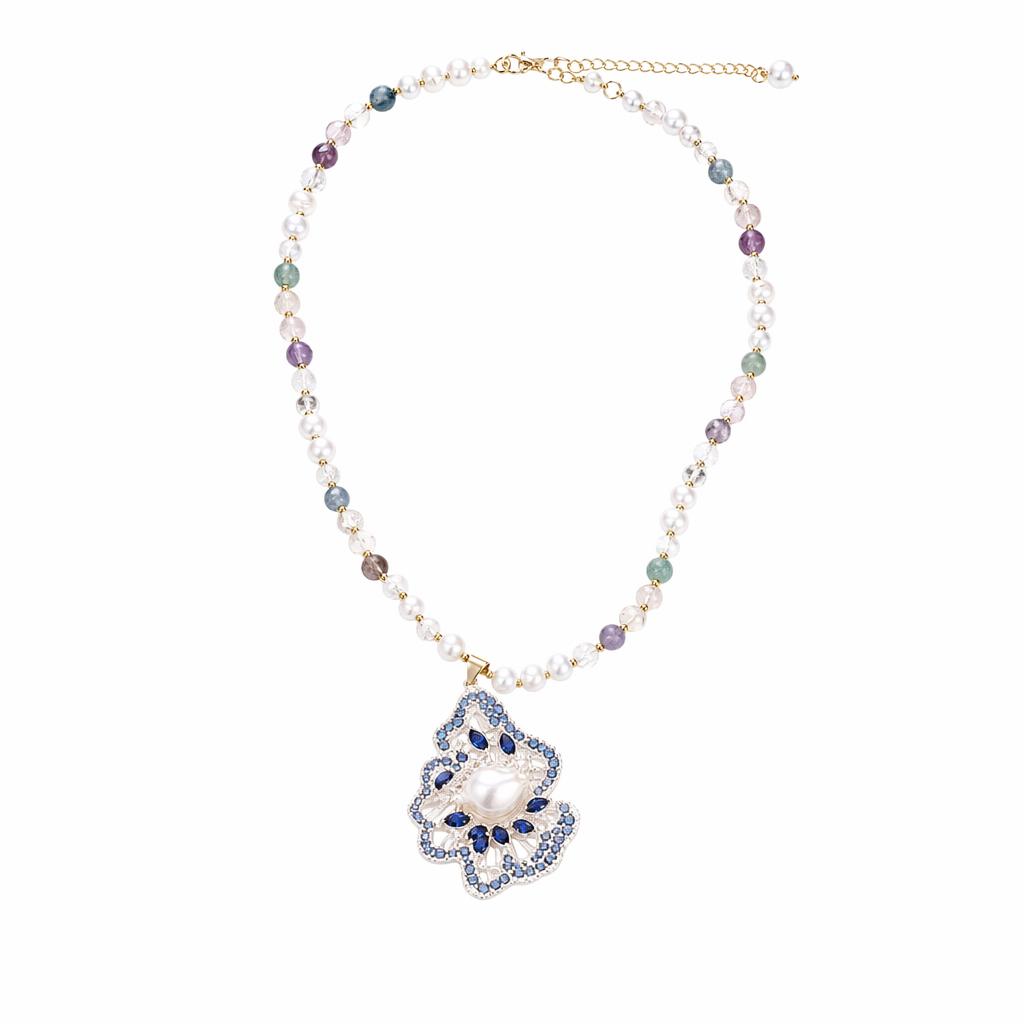
Pearl jewelry is particularly well-suited to the deep spot inventory model for several structural reasons. Pearl products have a relatively long shelf life compared to trend-sensitive fashion accessories — a pearl necklace that does not sell this season can typically be offered again in subsequent seasons without material quality degradation, unlike products with components that age, oxidize, or go out of fashion on a defined timeline. This means pearl inventory held in spot stock does not carry the same obsolescence risk that limits deep inventory strategies in other fashion jewelry categories.
The Baroque Pearl and freshwater pearl categories in particular have demonstrated consistent demand stability that makes deep spot inventory economically rational. These products occupy a specific aesthetic niche that is driven by luxury positioning and material authenticity rather than rapid trend cycling, which means demand for specific SKU patterns tends to be more predictable and more consistent across seasons than in pure trend-driven categories.
Implications for B2B Wholesale Buyer Strategy
The deep spot inventory capability has specific implications for how B2B wholesale buyers should structure their purchasing relationship with inventory-deep suppliers like Fuduola Jewelry:
- Smaller, more frequent replenishment orders: When spot inventory eliminates lead time constraints, buyers can shift from large seasonal purchase orders to smaller, more frequent replenishment orders that better match actual retail demand patterns.
- Trial and test ordering: Deep spot inventory makes it economically viable to test new product categories or aesthetic directions with smaller initial orders before committing to larger volumes, reducing the cost of product category experimentation.
- Emergency and rush fulfillment: Retail buyers who face unexpected demand surges or urgent restocking needs can rely on spot inventory suppliers as a backstop channel that traditional just-in-time suppliers cannot serve.
- Reduced safety stock requirements: Buyers who have a reliable spot-inventory supplier can reduce their own buffer inventory levels, freeing working capital for other uses while maintaining the same effective stockout protection level.