
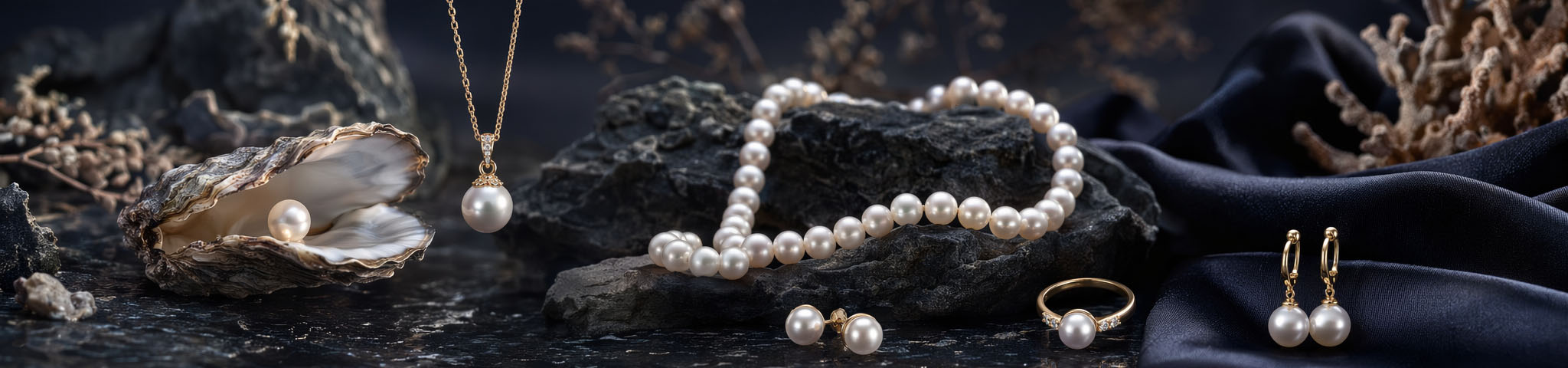
Blog
The Layering Economy: How Y2K Pearl Stacking, Minimalist Luxury, and Multi-Piece Set Curation Is Quietly Rewriting the B2B Fashion Jewelry Wholesale Price-to-Wearability Curve — and Why Versatile Collections Are Outperforming Statement Pieces in 2026

In 2024, the most valuable single SKU in most B2B fashion jewelry wholesale catalogs was the statement piece — a bold necklace, an elaborate drop earring, a centerpiece brooch designed to anchor an outfit and justify a premium retail price point. By mid-2026, the most interesting demand signal in the category is different: it is the layered set, the stacking combination, the curated multi-piece mini-collection that a consumer can wear in multiple configurations. This is not merely a consumer aesthetic preference — it is a structural shift in how fashion jewelry is being purchased, priced, and curated at the B2B wholesale level, with specific implications for inventory planning, MOQ structuring, and product line design.
The Wearability Revolution: Why Consumers Are Buying Multiple Pieces at Lower Price Points
The layering economy is fundamentally driven by a wearability recalibration at the consumer level. The modern fashion jewelry consumer — particularly in the 18-35 demographic that drives trending demand — has shifted from “buy one statement piece” to “buy a system of compatible pieces that can be combined and recombined.” This shift reflects several intersecting cultural and economic forces:
- Wardrobe efficiency mindset: In an era of hybrid work, frequent travel, and multi-context social participation, consumers want jewelry that works across casual, professional, and evening contexts. A single statement necklace often serves only one context; a set of compatible layering pieces serves three or four
- Social media content logic: The “outfit of the day” and “jewelry collection” content formats on Xiaohongshu, Instagram, and TikTok reward visual diversity. One image showing five stacking arrangements of the same five pieces generates more engagement value than one image of one expensive piece — and consumers are increasingly shopping for the collection, not the单品
- Economic recalibration: At $15-40 per layering piece versus $60-120 for a single statement necklace, consumers can assemble a more personally expressive jewelry wardrobe at the same total budget — and they are choosing this path consistently
- Personalization through combination: Layered pieces allow consumers to express individual taste through combination choices, creating a sense of personal curation that a single purchased piece does not provide
The Y2K Stacking Aesthetic: From Vintage Revival to B2B Wholesale Category
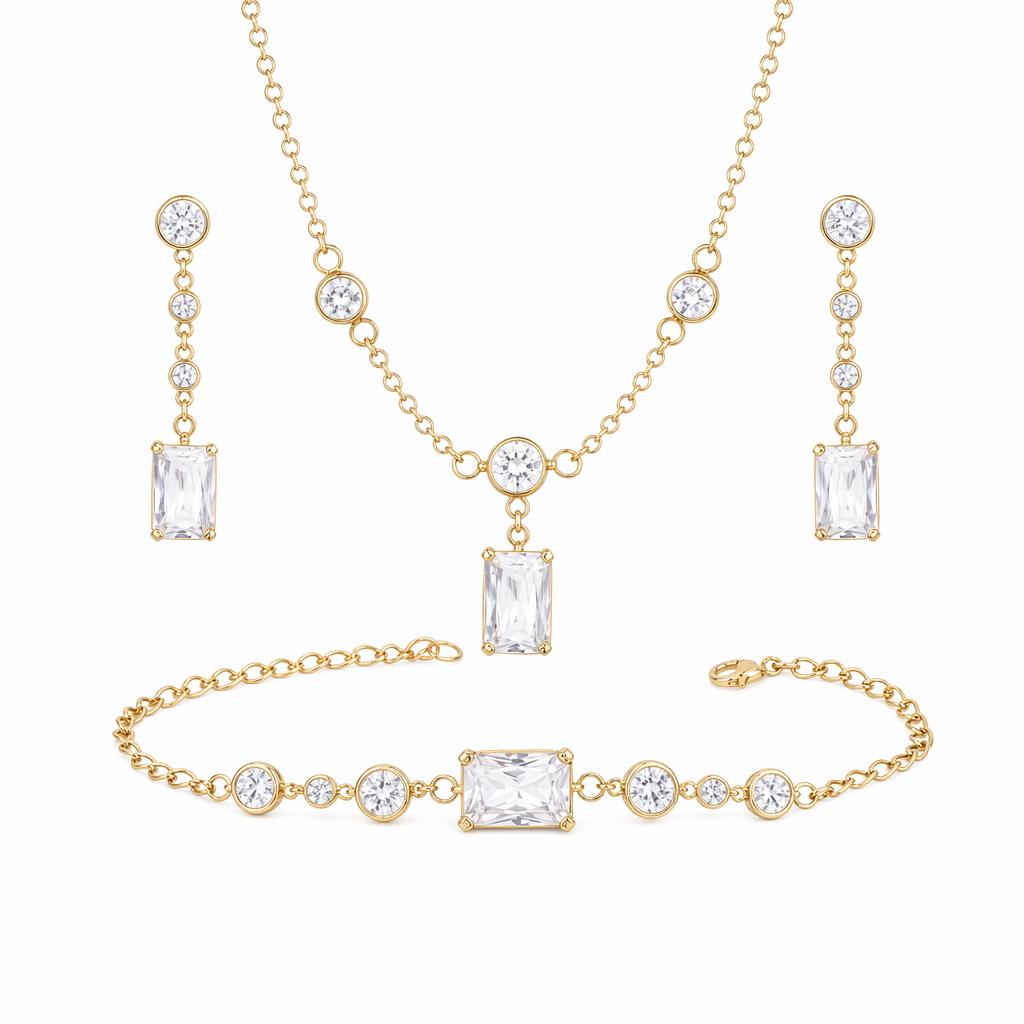
The Y2K aesthetic — low-rise jeans, butterfly clips, slim chain belts, layered pearls — has been one of the most durable trend cycles in recent fashion history, and its jewelry dimension is now having a direct and measurable impact on B2B wholesale category demand. But the Y2K jewelry revival of 2025-2026 is not a simple replication of early-2000s styles; it has been filtered through the contemporary minimalist luxury lens — cleaner lines, higher material quality, more restrained color palettes, and significantly more wearable scale.
Imfuduola’s product architecture — spanning Y2K pearl chokers, light luxury pearl pendant necklaces, and aesthetic shimmer designs — exemplifies this synthesis of Y2K stacking vocabulary with contemporary minimalism. The pearl clavicle chain necklace that works as a standalone piece at the office also works as a layering anchor in an evening stack; the Y2K choker that photographs as a statement piece on Xiaohongshu also layers with three other pieces for a weekend festival look. This versatility is not accidental — it is engineered into the product design at the manufacturing level, and it is the feature that B2B buyers should be evaluating when selecting Y2K-influenced inventory.
The Multi-Piece Set Economics: Why Sets Outperform Single Pieces on Every Commercial Metric
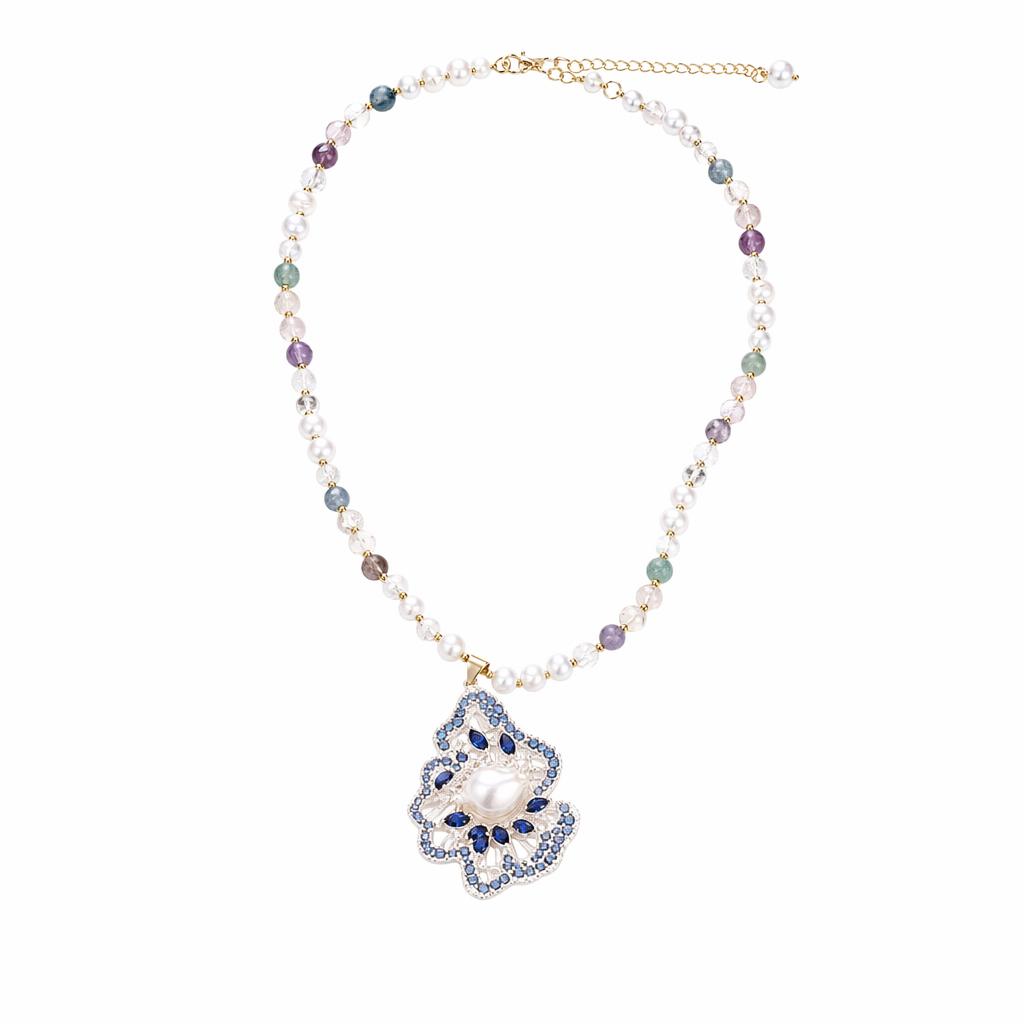
At the retail level, multi-piece layering sets — typically 3-5 coordinated pieces sold as a curated combination — are demonstrating commercial outperformance relative to equivalent single pieces across multiple dimensions:
- Higher total transaction value: A set of four pieces at $18 wholesale per piece generates $72 in gross wholesale value versus $35-50 for a single equivalent statement piece — and the set typically closes faster because it addresses multiple outfit scenarios simultaneously
- Lower return rate: Versatile pieces that serve multiple contexts generate significantly lower return rates than single-context statement pieces. When a consumer can wear a piece five different ways, the probability that it “doesn’t work” in their life is dramatically reduced
- Accelerated repeat purchase: Collectors who purchase a set of stacking-compatible pieces are statistically more likely to purchase additional compatible pieces in subsequent orders — building toward a complete layering wardrobe rather than a static collection
- Stronger retailer loyalty: Retail buyers who find a wholesale source that consistently delivers set-compatible stacking inventory develop sourcing stickiness that is extremely difficult to competitor-disrupt — because switching wholesale sources means rebuilding the stacking compatibility of their inventory from scratch
B2B Inventory Strategy for the Layering Economy
For B2B wholesale buyers, the layering economy requires a fundamentally different inventory planning framework than the statement-piece model:
The Compatibility-First SKU Selection Framework
Before adding any single SKU to a catalog, B2B buyers should evaluate its stacking compatibility score: How many existing SKUs in the catalog does this piece layer well with? What is the range of styling contexts (casual, professional, evening, festival) that this piece can credibly serve? Is the material and finish consistent with the layering system design language of the catalog overall? A SKU that scores high on compatibility is a better inventory investment than a higher-margin statement piece that only works alone.
The Set Architecture Model
Rather than selecting individual pieces, B2B buyers should consider selecting and presenting inventory as explicit set architectures — pre-designed 3-5 piece combinations that represent specific styling scenarios (the office stack, the weekend festival layering, the evening minimal luxury look). This shifts the sales conversation from per-SKU price negotiation to per-set value demonstration — and significantly increases average order value without proportionally increasing sales conversation complexity.
MOQ Restructuring for Set Programs
The layering economy creates specific pressure on conventional MOQ structures. When retailers want to purchase 4 pieces of Style A, 3 pieces of Style B, and 2 pieces of Style C in a set combination, the standard per-style MOQ of 12-36 units becomes a barrier to set-program adoption. B2B buyers who negotiate set-level MOQ structures — accepting 9-unit mixed-SKU orders across a pre-designed set architecture — will significantly accelerate set-program adoption among their retail accounts.
The Baroque Pearl Brooch Renaissance: Statement Pieces That Also Layer
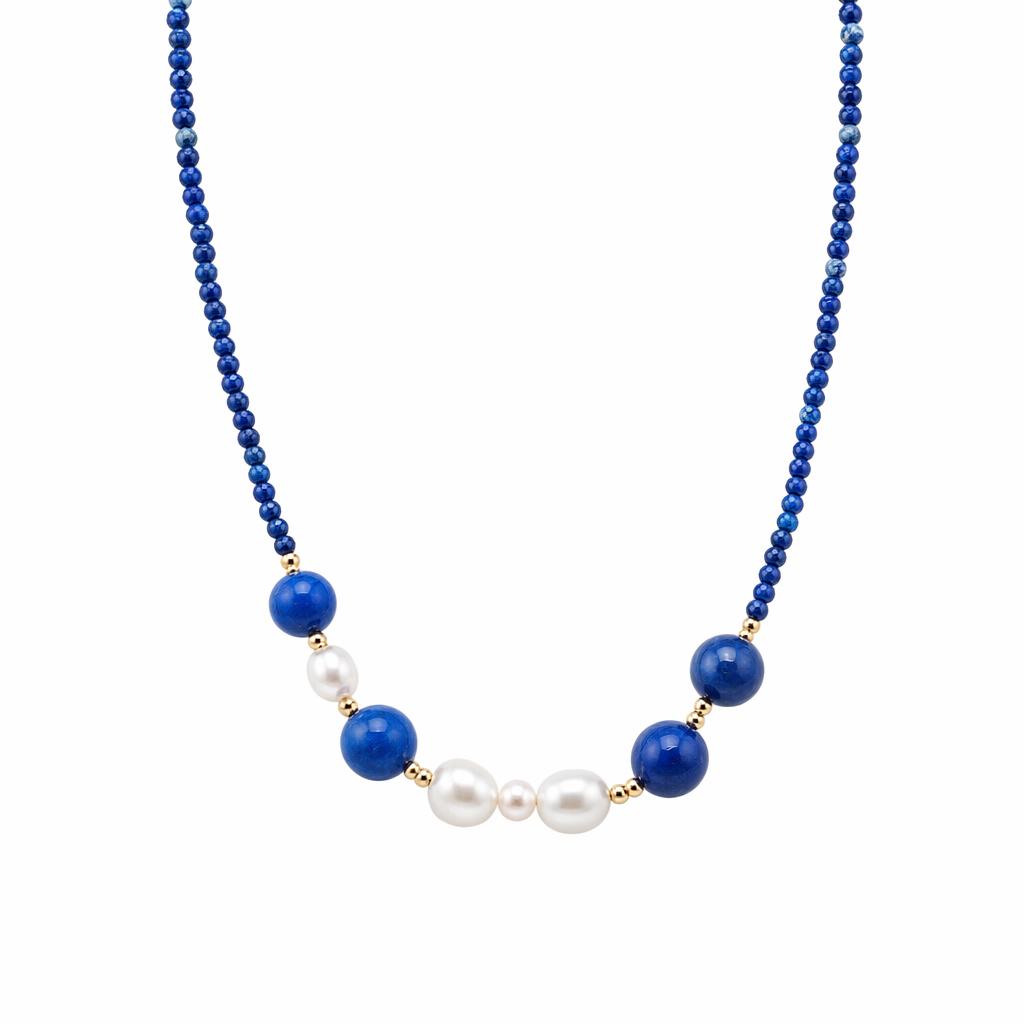
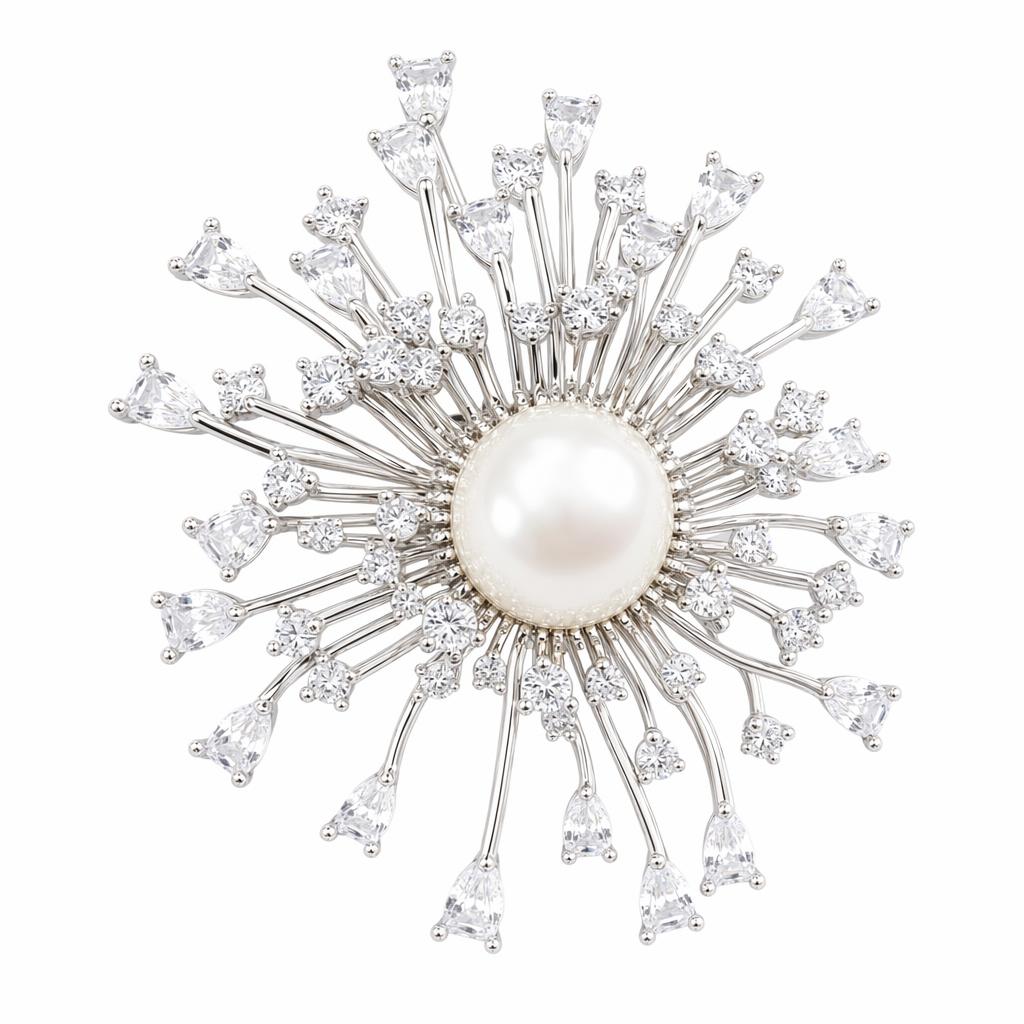
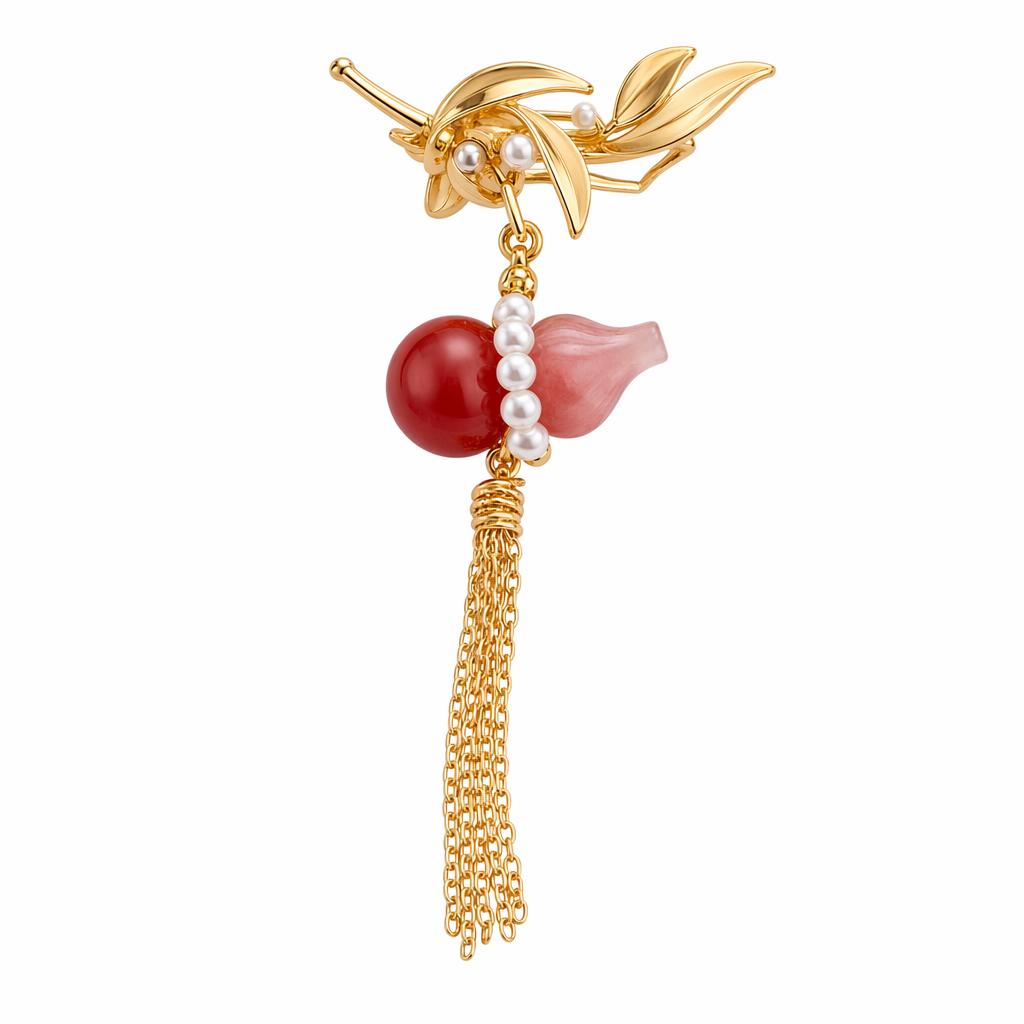
The baroque pearl brooch category — particularly the Chinese chic and vintage waist clip designs that Imfuduola’s catalog specializes in — represents an interesting exception to the statement-versus-stacking dichotomy. In the current layering economy, the baroque pearl brooch functions simultaneously as a statement piece (worn alone on a lapel or collar) and as a stacking element (layered with pearl necklaces and chains as a mixed-material centerpiece). This dual functionality positions baroque pearl brooches as one of the most commercially versatile categories in the current market — serving both the statement-piece buyer and the layering-program buyer from the same SKU.
The cultural dimension of baroque pearl brooches — Chinese chic aesthetic references, artisanal production quality, baroque pearl’s natural irregular beauty — also provides a premium positioning that supports higher wholesale price points while remaining compatible with the stacking aesthetic. A baroque pearl brooch at a $25-45 wholesale price point that layers with three other pieces at $15-25 each creates a complete layering outfit at $70-115 total retail — significantly more achievable than a $120 single statement necklace, but with comparable total retail value.
Seasonal and Occasion-Driven Set Strategy
The layering economy intersects powerfully with the event-driven procurement calendar that experienced B2B jewelry buyers already use. Seasonal and occasion-specific set architectures allow retail accounts to offer purpose-built layering combinations — the spring/summer light layers, the autumn/winter stackable warmth set, the holiday gifting collection — that drive repeat purchase at predictable intervals without requiring the full inventory commitment of independent per-SKU seasonal buying.
B2B buyers who work with suppliers to develop season-specific set collections — pre-designed 4-6 piece combinations with retail price point recommendations and outfit photography support — create a strategic offering that retail accounts find significantly more compelling than unguided per-SKU seasonal selection. This is particularly valuable for short-lead retail channels (TikTok Shop, Xiaohongshu storefronts) where content creators need retail-ready set options that can be featured as complete looks rather than individual products.
The Price-to-Wearability Index: A New B2B Buying Framework
The structural insight underlying the layering economy is a shift in how consumers evaluate the price-to-wearability ratio of fashion jewelry. In the statement-piece model, wearability is binary (the piece works or it doesn’t for a given occasion). In the layering model, wearability is combinatorial — the value of each piece increases when combined with compatible other pieces.
For B2B buyers, this creates a new evaluation framework: the Price-to-Wearability Index (PWI). A $20 layering piece that serves four different outfit contexts has a PWI of 4 context-units per dollar — significantly more valuable than a $50 statement piece that serves one context. When B2B buyers evaluate inventory through the PWI lens rather than pure margin percentage, the optimal inventory mix shifts consistently toward layering-compatible pieces and away from single-context statement pieces.
At the supplier level, product design teams are increasingly being asked to design for stacking compatibility — which means considering chain length modularity, clasp compatibility, material consistency across a series, and visual coherence of mixed-metal or mixed-material combinations. B2B buyers who work with manufacturers that have internalized stacking-compatible design philosophy — like the Imfuduola approach to Y2K pearl layering series — will find their inventory catalog naturally aligned with the demand patterns of 2026.
Conclusion: The Collection Is the Product in the Layering Economy
The layering economy is not a temporary trend cycle — it is a structural shift in how fashion jewelry is consumed, curated, and purchased. The consumer who buys a system of compatible stacking pieces is a fundamentally different wholesale customer than the consumer who buys a statement piece: they are building a wardrobe relationship with a brand or catalog, not making an isolated purchase decision. B2B wholesale buyers who can supply this customer — through set-program design, stacking-compatible inventory curation, and collection-level sales support — are capturing disproportionate margin and relationship value in a market where competitors are still selling单品.
The operational changes required are not radical: evaluating SKU compatibility before adding to catalog, structuring set-level MOQ options, presenting inventory as pre-designed set architectures, and developing season-specific layering collections. But these changes require B2B buyers to think about their inventory not as a product list but as a system design challenge — and that is a fundamentally different professional capability than conventional wholesale merchandising.
Explore Imfuduola’s full catalog of Y2K-compatible pearl layering necklaces, baroque pearl brooches, and stacking-ready choker series — designed and priced for the layering economy, available for B2B wholesale with mixed-set MOQ flexibility and OEM customization for private-label set programs.