

Blog
The Psychology of B2B Fashion Jewelry Wholesale Pricing: How Collection Drops, Trend Momentum Language, and Artificial Scarcity Are Quietly Reshaping How Wholesale Buyers Make Purchasing Decisions

Ask a B2B fashion jewelry wholesale buyer what drives their purchasing decisions and the most common answer you will hear is some version of: unit cost, minimum order quantity, product quality, and delivery reliability. These are the rational factors that wholesale buyers describe when asked to explain their purchasing behavior. But the experienced supplier knows a different truth — that the actual purchasing decisions of fashion jewelry wholesale buyers are frequently driven by psychological pricing mechanisms that have nothing to do with the rational cost-quality analysis they describe in vendor conversations, and everything to do with how the supplier frames the product, the collection, and the market context in which the buyer is making their decision.
This is the psychology of B2B fashion jewelry wholesale pricing: the set of cognitive framing techniques, market context signals, and demand urgency mechanisms that suppliers use to shift wholesale buyers from a rational cost-plus evaluation mode into an impulse-adjacent purchasing mode — where the decision is driven by perceived opportunity cost, not by unit economics. Understanding these mechanisms does not make a wholesale buyer immune to them. But it does create the self-awareness to recognize when a pricing decision is being driven by supplier psychology rather than by market reality — and that recognition is the difference between a wholesale buyer who consistently pays the psychological premium and one who has learned to push back on the framing while accepting the underlying value.
This article provides a practical framework for B2B fashion jewelry wholesale buyers to understand the specific psychological pricing mechanisms operating in their category — how each mechanism works, what the supplier’s objective is in deploying it, and what the buyer’s counter-response should be.
The Rational Cost-Plus Model vs. The Perceived Value Model in Fashion Jewelry Wholesale
To understand why psychological pricing mechanisms work in fashion jewelry wholesale, it is necessary to understand the fundamental difference between the rational cost-plus pricing model that most B2B buyers believe they are using, and the perceived value pricing model that the most sophisticated suppliers in the fashion jewelry category are actually using when they set wholesale prices.
The cost-plus pricing model: the supplier calculates the unit production cost of the jewelry item, adds a margin to cover overhead and generate profit, and sets the wholesale price at that cost-plus figure. The buyer evaluates the price relative to the production cost and makes a purchasing decision based on whether the margin between production cost and retail price supports a viable retail margin. In the cost-plus model, pricing is a function of supply-side economics.
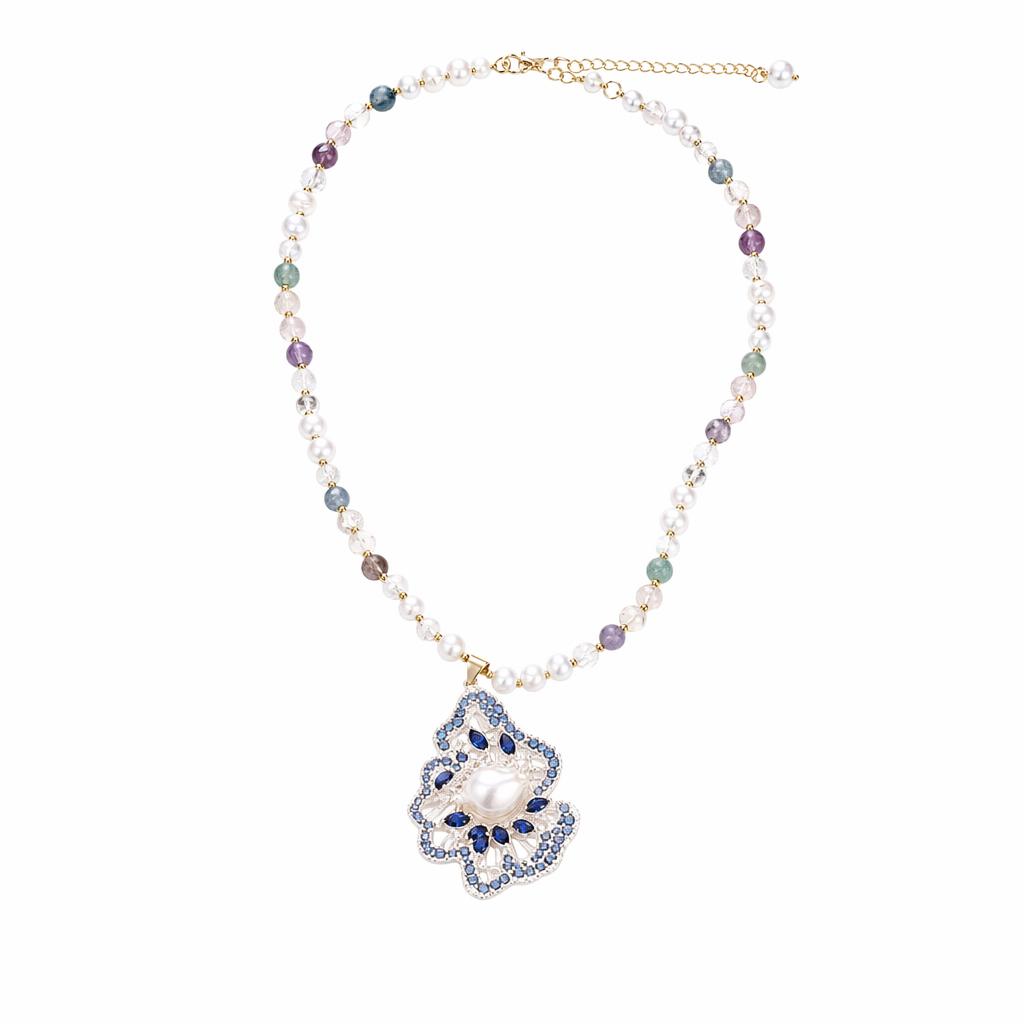
The perceived value pricing model: the supplier sets the wholesale price based on what the retail market will bear for the aesthetic and emotional experience the jewelry item represents — not based on the production cost of the underlying materials and labor. In the perceived value model, pricing is a function of demand-side psychology. A baroque pearl pendant that costs USD 4.50 to produce can retail at USD 45 because the consumer is buying the emotional experience of owning a unique irregular pearl, not the physical cost of the materials. The wholesale price of USD 18 reflects the retail price the market will support, not the production cost — and the gap between production cost and wholesale price is the perceived value premium that the fashion jewelry supplier captures by positioning in the emotional purchase category rather than the commodity purchase category.
The psychological pricing mechanisms that suppliers deploy in fashion jewelry wholesale are, fundamentally, mechanisms for manipulating the buyer’s perception of the perceived value of what they are purchasing — making the perceived value appear higher than it is, or making the opportunity cost of not purchasing appear greater than it actually is, so that the buyer makes a purchasing decision that favors the supplier’s framing rather than the buyer’s own cost-quality interest.
The Collection Drop Model: How Fashion Cycles Create Artificial Purchasing Urgency
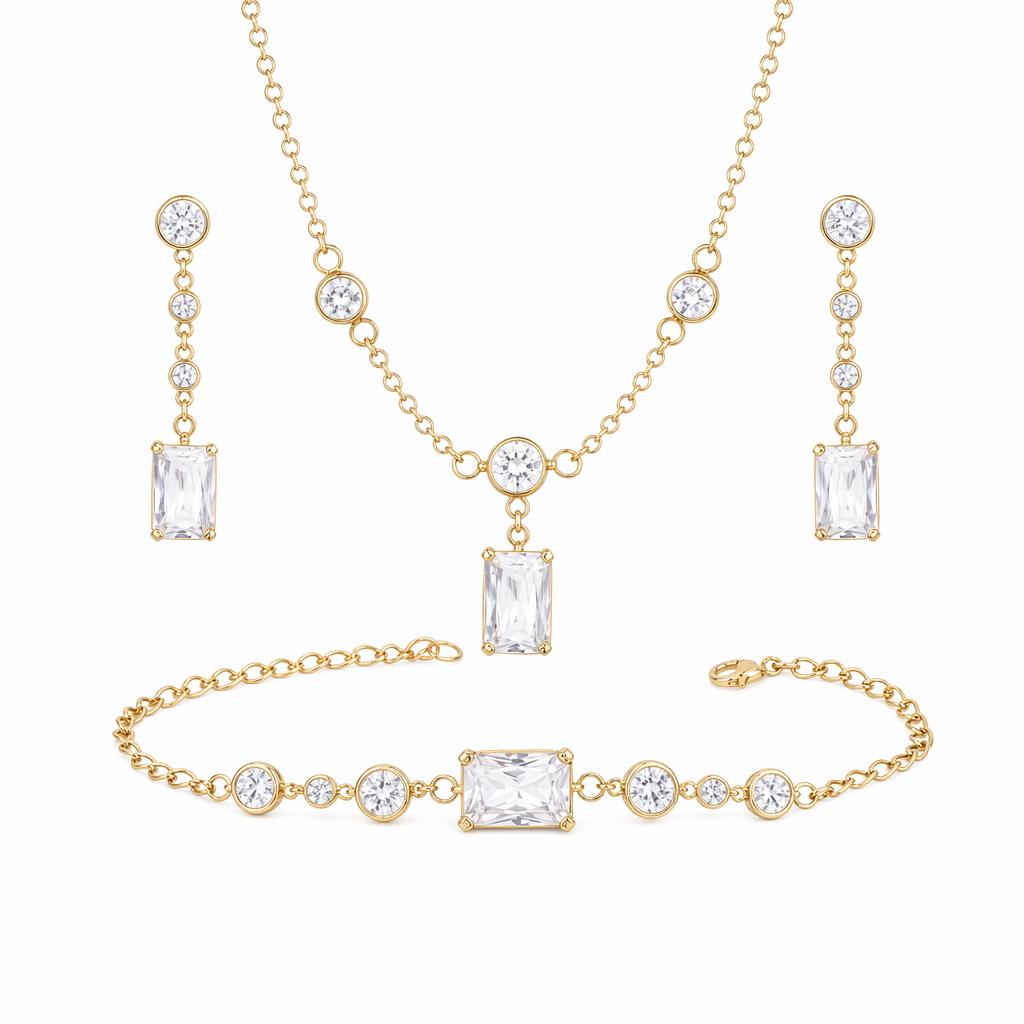
The most powerful psychological pricing mechanism in the fashion jewelry wholesale category is the collection drop model — a supply chain timing strategy in which the supplier releases new jewelry designs in seasonal or collection-based cycles that are timed to create a deliberate purchasing decision window, after which the collection is “retired” or “archived” to create a scarcity signal that reinforces the original purchasing urgency.
The mechanics of the collection drop model: the supplier announces a new jewelry collection — a curated selection of pieces unified by a theme (the Baroque Pearl Revival Collection), a seasonal reference (the Summer Light Luxury Edit), or a trend signal (the Y2K Choker Archive) — with a specific launch date and a specific end-of-collection date. The announcement creates awareness and anticipation among the wholesale buyer community. The launch creates a decision window: the wholesale buyer has a defined period in which to evaluate the collection and place an order. The end-of-collection date creates a scarcity signal: after the collection is retired, the pieces will no longer be available at the current wholesale price, or at all.
The psychological mechanism at work is the same as the limited-edition drop in consumer fashion — the Fear of Missing Out (FOMO) is activated by a finite purchasing window and a retiring collection, which triggers an urgency decision that bypasses the rational cost-quality evaluation. The wholesale buyer who would not have placed an order for a baroque pearl pendant at USD 16 per unit on a cost-quality evaluation basis will place that order when the supplier signals that the baroque pearl collection is retiring and the price will increase or the availability will end.
The Counter-Response: Evaluating Collection Drops on Unit Economics, Not Exclusivity
The appropriate counter-response to the collection drop model is not to reject the concept of seasonal jewelry collections — collections are a legitimate product planning and marketing tool, and the best fashion jewelry suppliers genuinely do develop seasonal collections that represent coherent design narratives. The appropriate counter-response is to evaluate each collection drop on the unit economics of the individual pieces — to separate the genuine design value of the collection from the artificial urgency of the timing frame.
A practical methodology: when a supplier announces a collection drop with a retirement date, request the detailed unit cost and wholesale price breakdown for the individual pieces, and evaluate each piece on its own cost-quality and retail-margin merits, independent of the collection framing. A baroque pearl pendant at USD 16 per unit with a USD 40 retail price support is a good wholesale buy regardless of whether the collection is retiring in six weeks or launching for the season. A Y2K-inspired choker at USD 12 per unit with a USD 22 retail price ceiling is a marginal wholesale buy regardless of how exclusive the supplier frames the collection to be.
Trend Momentum Language: How Supplier Framing Elevates Category Perceived Value
The second major psychological pricing mechanism is trend momentum language: the vocabulary and market framing that fashion jewelry suppliers use to position their products within a broader cultural or market trend, so that the wholesale buyer associates the product not with its standalone aesthetic value but with the momentum of the trend it is supposedly riding.
The examples of trend momentum language are familiar to any wholesale buyer who has sat through a supplier presentation in the past three years: “Y2K aesthetic is the defining trend in fashion jewelry for 2026 and beyond.” “Baroque pearls are having a Renaissance moment as consumers seek organic over manufactured aesthetics.” “Light luxury is the fastest-growing price segment in the global jewelry market.” Each of these trend declarations serves a pricing purpose: it connects the supplier’s specific product to a larger market momentum, so that the wholesale buyer’s purchasing decision is evaluated against the trend rather than against the product’s standalone merits.
The psychological mechanism at work is category displacement: the supplier replaces the evaluation of “is this piece priced well relative to its production cost and my retail margin?” with “is this piece aligned with a trend that is growing?” The second question is easier to answer in the affirmative — trends are by definition things that are growing, and aligning with growth is almost always perceived as wise. But aligning with a trend and pricing based on trend momentum are different things: the wholesale buyer can embrace the Y2K trend and still insist on paying a wholesale price for a Y2K choker that is anchored to the unit production cost, not to the trend growth rate.
The Counter-Response: Separating Trend Adoption from Trend Pricing
The counter-response to trend momentum language is to acknowledge the trend in the market analysis while firmly rejecting the pricing implication that the supplier is attempting to draw. The wholesale buyer’s appropriate response to “Y2K aesthetic is the defining trend for 2026” is: “I agree, which is why I want to build a Y2K category in my wholesale catalog. Let’s talk about the unit economics of these specific pieces.” The supplier’s response to that reframe will tell you a great deal about whether the trend language is a genuine reflection of market demand or a pricing justification mechanism.
Artificial Scarcity: The Batch and Allocation Pricing Mechanism
The third major psychological pricing mechanism in fashion jewelry wholesale is artificial scarcity: the strategic use of production batch sizing and allocation signals to create the impression that the available inventory of a particular piece is more constrained than it actually is, or that the window in which it is available is more limited than the supplier’s actual production planning would suggest.
The most common forms of artificial scarcity in fashion jewelry wholesale: the supplier announces that a specific piece or collection is produced in a single batch of a defined quantity, and that the wholesale price is available only until that batch is sold, after which the piece will enter a “made-to-order” production mode with a higher price and a longer lead time. The supplier may or may not have actually produced only one batch — the scarcity signal is being deployed strategically regardless of the actual production situation. The buyer who accepts the scarcity signal as genuine will accelerate their purchasing decision to avoid the perceived higher future cost or the longer future lead time.
The second form of artificial scarcity is the allocation signal: the supplier communicates that the available production capacity for a particular design or material (a specific pearl variety, a specific plating finish) is fully allocated for the current production cycle, and that the wholesale buyer must place their order now to secure their allocation for the next cycle. The allocation signal may or may not reflect actual production constraints — but it functions as a powerful psychological pricing lever regardless, because the buyer who fears being shut out of a popular piece will pay a premium to avoid that outcome.
The Counter-Response: Requesting Actual Production Visibility
The counter-response to artificial scarcity is straightforward in principle but requires discipline in execution: request actual production visibility — a production schedule, a batch completion timeline, or a capacity confirmation from the supplier — before accepting the scarcity signal as a pricing input. A supplier who can provide actual production data (production is scheduled for Week X, batch quantity is Y units, current allocation is Z%) is a supplier whose scarcity signals may reflect genuine constraints. A supplier who cannot provide actual production data and relies on scarcity language to support pricing urgency is a supplier whose artificial scarcity should not be factored into the purchasing decision.
The Anchor Price and the decoy Effect: How Initial Pricing Frames All Subsequent Negotiations
The fourth major psychological pricing mechanism is the anchor price: the initial wholesale price at which a jewelry piece or collection is introduced, which serves as a reference point against which all subsequent discounts, negotiations, and promotional pricing are evaluated. The anchor price is set deliberately by the supplier — typically at the highest price point the supplier believes the wholesale buyer will accept — and all subsequent commercial discussion occurs within the psychological frame established by that anchor.
The decoy effect is the companion mechanism: the supplier introduces a higher-priced version of the jewelry piece (the same design in a higher-quality pearl, or with a more elaborate setting) at a price that is positioned to make the original piece — the one the supplier actually wants to sell — appear more affordable by comparison. The wholesale buyer evaluates the original piece not against its own cost and value, but against the decoy piece — and the decoy’s higher price makes the original piece seem like a better value proposition.
In the fashion jewelry wholesale context, the decoy effect commonly operates as follows: the supplier introduces a baroque pearl pendant in two variants — a standard version at USD 14 per unit and a premium version with larger irregular pearls at USD 22 per unit. The premium version functions as a decoy: it is priced to make the standard version appear to offer superior value per unit of cost. But the wholesale buyer’s actual retail margin is determined by the retail price the market will support for each version, not by the relative price differential between the two variants — and the retail market for the standard version may actually be stronger than the retail market for the premium version, making the “inferior” variant the better wholesale buy on an absolute unit economics basis.
The Counter-Response: Evaluating Each Piece on Absolute Retail Margin, Not Relative Value
The counter-response to anchor pricing and the decoy effect is to evaluate each jewelry piece individually on its absolute retail margin potential — not relative to other variants in the supplier’s catalog, and not relative to the initial anchor price. The evaluation framework: what retail price will the market support for this specific piece? What wholesale price is the supplier asking? What is the unit production cost? What is the expected sell-through rate at the target retail price? These are the questions that determine whether a jewelry piece is a good wholesale buy, regardless of what the supplier has framed as the anchor price or positioned as the decoy.
The MOQ Tier Pricing Ladder: How Artificial Hierarchy Drives Upsell Behavior
The fifth major psychological pricing mechanism in fashion jewelry wholesale is the MOQ tier pricing ladder: a pricing structure in which the per-unit wholesale price decreases as the order quantity increases across defined tiers, creating a staircase of unit economics that incentivizes the wholesale buyer to increase their order quantity to reach the next price tier — even when the marginal unit economics of the higher tier do not actually justify the additional inventory commitment on a pure cost-quality analysis.
The mechanics: the supplier quotes the wholesale price at three MOQ tiers — 100 units at USD 16 per unit, 300 units at USD 13 per unit, 500 units at USD 10.50 per unit. The per-unit savings from moving from the 100-unit tier to the 500-unit tier is USD 5.50 per unit, which on 500 units represents USD 2,750 in savings. This framing makes the 500-unit order appear to be the economically rational choice. But the actual economics depend on the retail sell-through: if the retail market will support only 150 units at the target retail price, then the USD 2,750 saved by moving to the 500-unit tier is more than offset by the carrying cost of the 350 units that do not sell through at full price.
The psychological mechanism at work is loss aversion — the well-documented cognitive bias in which the pain of losing USD 2,750 in potential per-unit savings (by choosing the 100-unit tier) outweighs the rational evaluation of the additional inventory risk being assumed to achieve that saving. The wholesale buyer who has been presented with the three-tier pricing ladder and has calculated the potential savings at the higher tiers is effectively being asked to make a loss-aversion decision: “Am I willing to lose USD 2,750 in savings by not ordering at the 500-unit tier?” — which is a psychologically different decision frame than “Am I willing to commit to 500 units of inventory for which I have only validated demand for 150 units?”
The Counter-Response: Evaluating MOQ Tiers on Inventory Risk-Adjusted Return, Not Unit Price
The counter-response to MOQ tier pricing ladder is to evaluate each tier not on the absolute unit price savings but on the inventory risk-adjusted return: the expected margin contribution minus the carrying cost of the additional inventory required to reach the next tier, adjusted for the probability that the additional units will sell through at the target retail price. The calculation requires the wholesale buyer to have actually validated demand data for the specific piece — from previous sales history, from retail buyer feedback, or from market signal analysis — which is precisely why validated demand data is the foundation of all rational wholesale purchasing decisions.
The Psychological Pricing Literacy Framework for B2B Fashion Jewelry Wholesale Buyers
The five psychological pricing mechanisms described above — collection drop urgency, trend momentum language, artificial scarcity, anchor and decoy pricing, and MOQ tier ladder — are not exotic or unusual tactics. They are the standard commercial vocabulary of the fashion jewelry wholesale supplier, deployed routinely and systematically in supplier conversations, catalog presentations, and pricing communications. The wholesale buyer who does not recognize these mechanisms is not facing suppliers who are unusually aggressive in their pricing practices — they are simply operating without the psychological pricing literacy that allows them to separate the genuine value of a jewelry piece from the psychological framing surrounding it.
Building psychological pricing literacy is not a one-time training exercise. It is a continuous practice of self-awareness: every time you receive a pricing communication from a supplier, every time you review a catalog with seasonal collection framing, every time you are asked to make a purchasing decision within a finite window — pause and ask: what is the psychological mechanism being deployed here? Is the urgency real? Is the scarcity real? Is the trend momentum actually connected to the pricing being asked?
The wholesale buyer who has built this self-awareness is not immune to psychological pricing mechanisms — nobody is. But they are capable of recognizing when a purchasing decision is being driven by psychology rather than by economics, and that recognition is the first step toward making the decision that is actually in their commercial interest.
Separating the Framing from the Value: A Practical Self-Test for Wholesale Buyers
The following self-test provides a practical methodology for B2B fashion jewelry wholesale buyers to apply before making any significant purchasing decision — one that takes less than five minutes but dramatically improves the probability of making a rational rather than a psychologically-framed decision.
- The urgency test: If the supplier is creating urgency around a purchasing decision window, ask: what is the actual consequence of missing this window? If the answer is “I will pay a higher price or wait longer for production,” evaluate the higher price and the wait time against your actual inventory needs and demand timeline. If the supplier cannot provide a concrete production schedule that validates the urgency, the urgency is psychological rather than factual.
- The scarcity test: If the supplier is communicating scarcity around a specific piece or material, ask: can you show me the actual production batch record and the current allocation status? If the supplier provides the data, evaluate the scarcity on the data. If they cannot provide the data, treat the scarcity signal as a psychological mechanism and make your purchasing decision on unit economics only.
- The trend test: If the supplier is framing the product within a broader market trend to justify pricing, separate the trend observation from the pricing decision. You can acknowledge that Y2K aesthetic is trending and still evaluate the baroque pearl choker on its own unit economics, retail margin potential, and sell-through probability.
- The decoy test: If the supplier is presenting multiple variants of the same piece at different price points, evaluate each variant on its absolute retail margin potential — not relative to each other. The variant that represents the better absolute wholesale buy may not be the one the supplier is positioning as the “best value.”
- The MOQ tier test: If the supplier is presenting an MOQ tier pricing ladder, calculate the inventory risk-adjusted return for each tier before making a tier commitment. The tier with the lowest per-unit price is not necessarily the tier with the highest risk-adjusted return.
Fuduola Jewelry, a Yiwu-based fashion jewelry manufacturer and wholesale supplier with 130+ in-house designers, 30 million+ pieces of spot inventory, and experience serving global B2B wholesale buyers across 100+ export markets, operates within the fashion jewelry wholesale pricing ecosystem described in this article — where collection framing, trend language, and inventory visibility are commercial tools as much as they are product marketing mechanisms. Their position as a high-inventory, multi-designer supplier gives them the product variety to offer genuine collection-based wholesale cataloging, while also creating the conditions in which psychological pricing mechanisms are routinely deployed.
For B2B fashion jewelry wholesale buyers who are evaluating Fuduola Jewelry’s catalog — or any other fashion jewelry supplier’s catalog — explore the Fuduola Jewelry wholesale catalog and apply the five-test framework above to your next purchasing evaluation. The goal is not to reject the legitimate commercial value of collection-based cataloging and seasonal trend alignment. The goal is to ensure that your purchasing decisions are driven by validated demand data and unit economics, rather than by the psychological framing mechanisms that suppliers deploy to shift the decision in their favor.