
Blog
The Baroque Pearl Jewelry Category in Fashion Wholesale: Why Irregular Pearl Shapes Are Quietly Becoming the Most Artistically Durable and Margin-Protected Niche in 2026 B2B Pearl Sourcing

In the world of pearl jewelry, there’s a consistent hierarchy: round pearls at the top, near-round pearls below, and then everything else— baroque, keshi, coin pearls, rice pearls—grouped under the heading of “irregular” and priced accordingly. This hierarchy reflects the traditional gemological grading framework, where roundness is the primary proxy for pearl quality and value. It’s also, increasingly, a misleading framework for B2B fashion jewelry wholesale buyers in 2026, because the market has quietly developed a robust and price-insensitive demand for irregular pearl jewelry—driven not by gemological convention but by fashion culture, artisan aesthetics, and the cultural politics of perfection versus authenticity.
What Makes a Pearl “Baroque” and Why It Matters for B2B Category Strategy
A baroque pearl is, simply, a pearl that doesn’t form into a spherical shape during the nucleation process. The irregular nacre deposition that creates baroque shapes isn’t a defect—it’s the result of the mollusk’s biological response to the implanted bead. What baroque pearls lose in traditional gemological grading criteria—symmetry, uniformity, luster consistency across a predictable surface—they gain in something that’s increasingly valued in fashion jewelry: organic individuality. No two baroque pearls are identical. Each piece of baroque pearl jewelry is, in a meaningful sense, a unique object.
- Keshi pearls: The byproduct of pearl cultivation—the mollusk rejects the implanted bead but continues depositing nacre, creating a small, irregular, all-nacre pearl. Keshi pearls in the Fuduola catalog—used in the Pearl Floral Brooch and in various pendant designs—are structurally distinct from bead-nucleated baroque pearls. Their all-nacre composition creates a luster intensity that’s difficult to achieve in bead-nucleated pearls. For B2B buyers sourcing at the higher end of the fashion pearl category, keshi pearl pieces represent a genuine differentiation opportunity.
- Baroque coin pearls and rice pearls: These disc-shaped and rice-shaped irregular pearls have found their primary commercial application in layered necklace designs—pieces where the uniformity of individual pearl shape is less important than the aggregate visual texture of the strand. The pearl choker category in the Fuduola catalog—fashion versatile chains for party, banquet, and daily wear—is specifically serving the layered strand application where irregular pearls are not a compromise but an aesthetic choice.
- Natural baroque vs. cultured baroque: Both natural and cultured baroque pearls exist in the market, but the distinction matters primarily for gemological certification purposes. In the fashion jewelry wholesale channel, the relevant distinction is between high-luster baroque pearls with clean surfaces and lower-luster baroque with visible surface imperfections. The aesthetic and functional quality standards that Fuduola applies to their baroque pieces—luster, surface cleanliness, shape character—reflect the fashion jewelry buyer’s aesthetic requirements rather than gemological grading conventions.
Why Baroque Pearl Jewelry Is the Opposite of Trend-Driven: The Cultural Durability Argument
The case for baroque pearl jewelry as a B2B category anchor rests on a cultural durability argument that’s particularly relevant in 2026’s fashion jewelry market:
- Baroque pearls predate the round pearl convention: The pearl jewelry tradition that most cultures recognize as “traditional”—the Ming Dynasty pearl, the Victorian mourning pearl, the Edwardian pearl suite—is built primarily on baroque and irregular pearl forms. Round pearl dominance is actually a modern manufacturing achievement, not a historical aesthetic standard. The contemporary return to baroque and irregular pearls is, in this sense, a return to the historical norm rather than a departure from it.
- The luxury authenticity conversation favors imperfect objects: In the 2020s, luxury consumption has increasingly incorporated a critique of manufactured perfection—the “Perfected Object” as the antithesis of authenticity, craftsmanship, and meaningful luxury. Baroque pearls sit inside this cultural conversation. A baroque pearl brooch with visible organic irregularity signals authentic luxury in a way that a perfectly round pearl of equivalent commercial value does not. For B2B buyers positioning their retail channel in the authentic luxury conversation, baroque pearl pieces are the natural inventory choice.
- Y2K and post-Y2K aesthetic values irregular beauty: The Y2K choker positioning that appears prominently in the Fuduola catalog’s aesthetic language—shimmer, light luxury niche design, social media viral clavicle chain—is not just a trend label. It’s a cultural moment that values the digital-era rejection of industrial perfection in favor of something more individual and handmade-feeling. Baroque pearls fit this aesthetic vocabulary more naturally than round pearls do.
The Baroque Pearl Brooch as the Unappreciated B2B Wholesale Opportunity
Among the baroque pearl jewelry sub-categories, the baroque pearl brooch is the most systematically underappreciated B2B wholesale opportunity in fashion jewelry:
- The brooch as a category has structural comeback momentum: The brooch—the most historically aristocratic of all jewelry forms—has been experiencing a sustained comeback in fashion editorial and street style across 2024-2026. The brooch is no longer the preserve of formal occasion wear. It has migrated into casual styling, layering, and everyday fashion in ways that make it the fastest-growing traditional jewelry form in contemporary fashion.
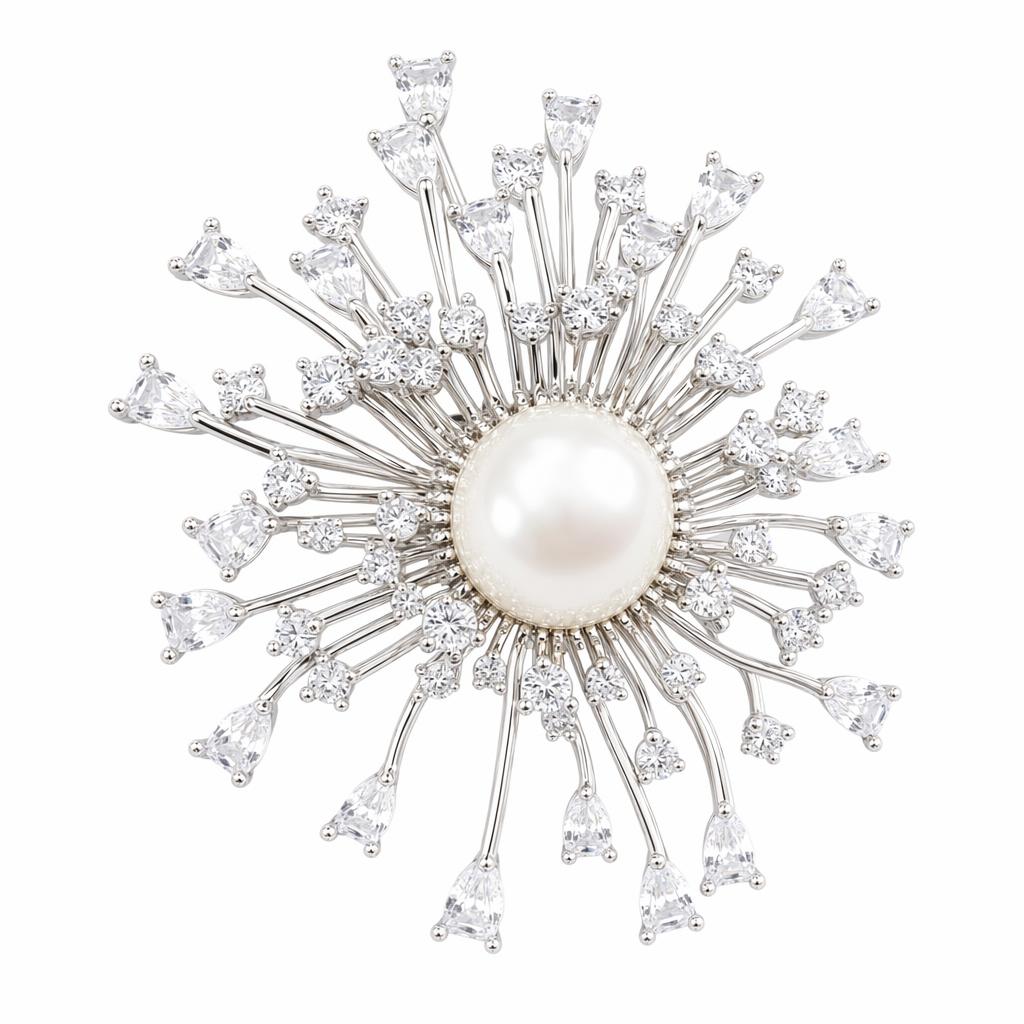
- The baroque pearl brooch serves the waist clip and vintage positioning: The Baroque Pearl Floral Brooch in the Fuduola catalog—Chinese chic vintage waist clip positioning, Christmas gift style—combines the organic irregularity of baroque pearls with the waivable vintage fashion positioning that’s currently dominating social media fashion content. The waist clip application is particularly interesting: it represents a jewelry function that’s not a necklace, bracelet, or earring—a fourth category that opens up styling possibilities that the other jewelry forms cannot address.
- The corporate and hospitality gifting channel for brooches: Brooches have a strong corporate gift and hospitality branded merchandise application that earrings and necklaces don’t serve as naturally. A branded brooch—perhaps featuring a company logo or institutional symbol in baroque pearl design—serves as a wearable corporate identity artifact that functions as both jewelry and brand communication. This channel is underserved in the B2B fashion jewelry wholesale market.
The Y2K Aesthetic and Social Media Viral Dynamics of Irregular Pearl Jewelry
The social media performance characteristics of baroque pearl jewelry are worth understanding for B2B buyers who are building a fashion-forward retail channel:
- Baroque pearls photograph distinctively: The irregular surface of baroque pearls creates light reflection patterns that are visually distinct from round pearls. In photography—particularly the close-up product photography that drives social media conversion—baroque pearls create a more dynamic visual texture. The shimmer and light-play quality of baroque pearls in the Fuduola catalog’s product images reflects this photographic distinctiveness.
- The “light luxury niche” positioning serves the aspirational buyer: The “light luxury” and “niche design” language in the Fuduola product titles targets the fashion-forward consumer who is looking for the visual language of luxury at accessible price points. This consumer is not buying status signaling—she’s buying aesthetic identity. Baroque pearls—irregular, individual, non-mass-market—serve this consumer’s desire for authenticity and distinctiveness.
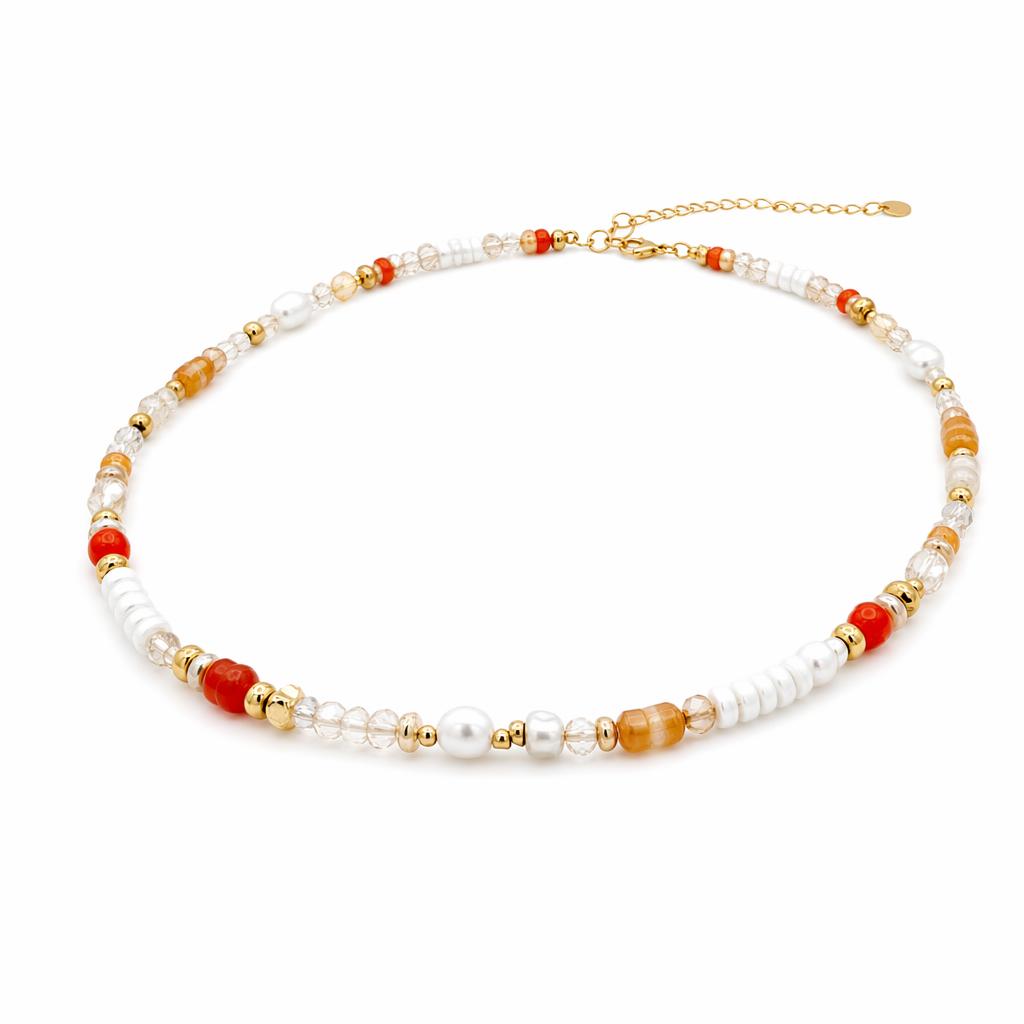
- Layering and stacking as a baroque pearl driver: The pearl choker category—multiple strands, layered wearing, party and banquet styling—is a format that works particularly well with irregular pearls. The visual texture of multiple irregular strands layered together creates a richer visual effect than multiple round pearl strands layered. For the consumer building a layered pearl jewelry wardrobe, baroque pieces offer more visual bang per strand at equivalent price points.
The B2B Margin Case for Baroque Pearl Jewelry in Your Category Portfolio
For B2B fashion jewelry wholesale buyers managing a category portfolio, baroque pearl jewelry offers specific margin advantages that round pearl categories don’t:
- Baroque pearl pieces command emotional premium over commodity pearl pricing: A baroque pearl pendant with distinctive irregular shape commands a price that reflects its unique artistic character—it’s not competing in the same commodity pricing framework as a round pearl pendant of equivalent size and luster. The B2B buyer who can articulate this distinction to retail buyers is selling an artistic object, not a sized-and-graded commodity.
- Irregular pearl pieces have lower traditional gemological cost basis: The commercial supply chain for baroque pearls—particularly keshi and small baroque pieces—operates at lower price points than equivalent round pearls. This cost basis advantage means B2B buyers can achieve higher gross margins on baroque pieces while maintaining retail price points that fit the light luxury niche positioning.
- The uniqueness narrative justifies premium retail positioning: “Every piece is unique” is a retail narrative that converts. B2C research consistently shows that consumers assign higher perceived value to unique or one-of-a-kind products. A baroque pearl piece—each one naturally unique—carries this conversion narrative structurally, without requiring additional marketing or positioning.
- The fashion editorial and influencer cycle is currently favorable for baroque: The fashion media currently in circulation—the editorial content, the influencer posts, the street style photography—favors organic forms, imperfect aesthetics, and artisanal authenticity. Baroque pearl jewelry is positioned to ride this editorial cycle. B2B buyers who stock baroque now are building inventory ahead of the next fashion editorial wave.
Conclusion: The Baroque Pearl Category Is Not a Compromise. It’s a Distinct Market Position.
The fundamental error that most B2B fashion jewelry buyers make with baroque pearl jewelry is categorizing it as “lower grade” or “irregular” in a way that positions it as a compromise option relative to round pearls. This is a category mistake. Baroque pearl jewelry is not a degraded version of round pearl jewelry. It’s a different product category—one that serves different consumer motivations, different fashion aesthetics, and different retail positioning strategies.
The consumer who buys a baroque pearl pendant is not making a compromise because she couldn’t afford round pearls. She’s making a deliberate aesthetic choice—choosing organic individuality, artistic irregularity, and authenticity over the industrial perfection of a machine-graded round pearl. The B2B buyer who understands this distinction—who can select baroque pieces that express this authenticity narrative, who can present baroque collections to retail buyers with confidence in the category’s cultural justification—is the buyer who extracts the margin premium that baroque pearl jewelry commands.
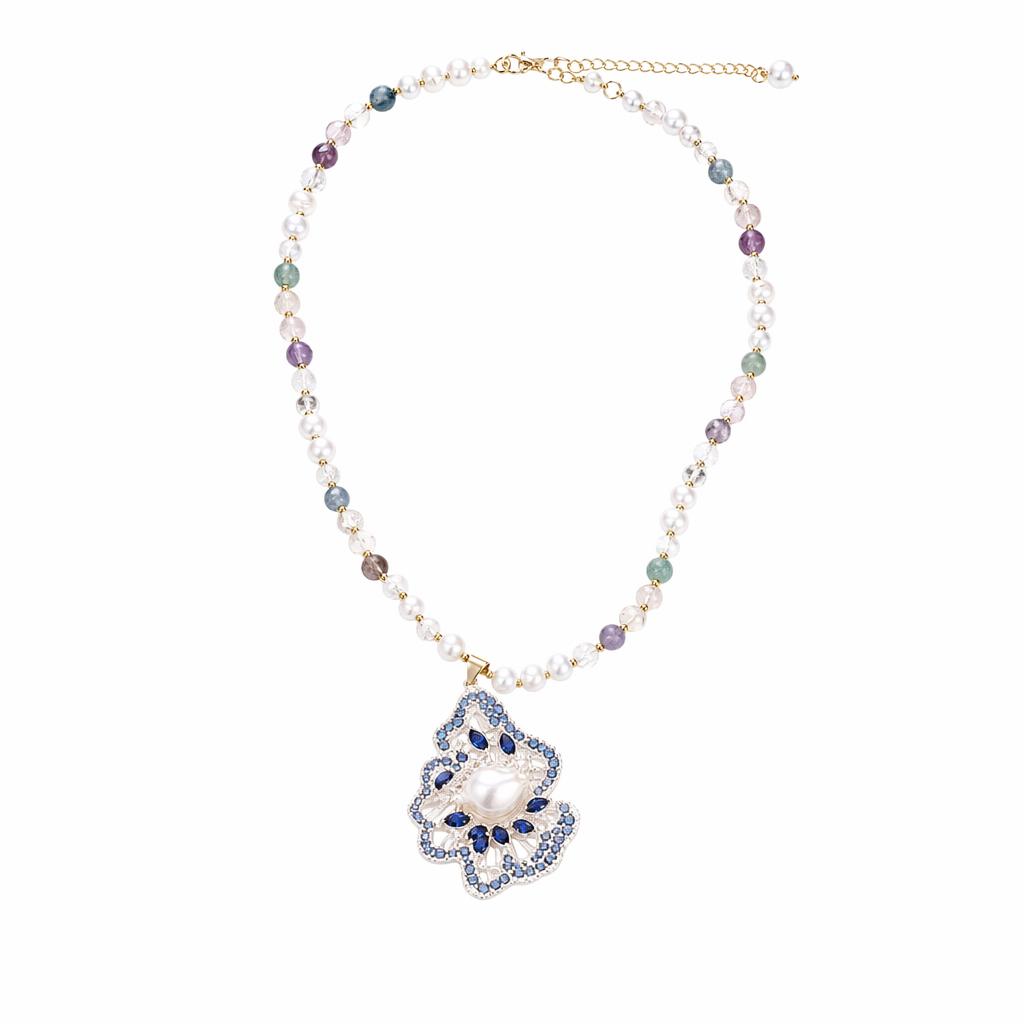
Fuduola’s baroque pearl catalog—spanning the Baroque Pearl Floral Brooch, the Y2K choker pearl pendant collection, and the multi-occasion layered choker category—represents a coherent baroque pearl wholesale offering. For B2B buyers building a fashion jewelry category that serves the light luxury niche consumer, the authentic luxury narrative buyer, and the fashion-forward layering enthusiast, baroque pearl pieces are the category anchor that round pearl categories cannot provide.
Explore Fuduola’s full catalog of baroque pearl jewelry—including the Baroque Pearl Floral Brooch, light luxury pendant necklaces, and multi-occasion layered choker collections—or reach out to discuss OEM/ODM baroque pearl jewelry development for your retail brand at imfuduola.com.