
Blog
The Pearl Layering and Stack Economy: How B2B Fashion Jewelry Buyers Can Build the Most Cross-Sell Amplifying and Repeat-Purchase Generating Product Assortment Around Necklace Length Theory, Stacking Bracelets, and the Jewelry Configuration Psychology That Drives Multi-Piece Purchases

The jewelry layering trend—wearing multiple chains at different lengths, stacking multiple rings on the same finger, accumulating bracelets in graduated sizes—has transformed the economics of fashion jewelry retail by converting single-piece purchase occasions into multi-piece purchase events. The layering trend is not merely aesthetic; it reflects a specific psychology of self-expression through accumulation and configuration, where consumers curate their jewelry wardrobe the way they curate their clothing wardrobe—with each configuration communicating a different facet of personal style. For B2B fashion jewelry buyers, the layering category creates a unique commercial opportunity: products designed specifically for layering generate significantly higher average order values and repeat purchase rates because consumers need multiple complementary pieces to achieve their desired layered look. The buyers who understand layering psychology build cross-sell strategies that transform single buyers into collection collectors.
The Necklace Length System and Visual Hierarchy
Layered necklaces follow specific visual principles:
- Collar Length (12-14 inches): Sits tight against the base of the throat. Creates a dramatic, high-fashion silhouette. Best for V-necklines and off-shoulder dresses.
- Choker Length (14-16 inches): Sits at the collarbone. The most versatile layering anchor. Works with almost any neckline and face shape.
- Princess Length (18-20 inches): Falls at or just below the clavicle bone. The most common default necklace length. Works as a standalone piece or as the middle layer in a three-layer stack.
- Matinee Length (22-24 inches): Falls between the clavicle and the bust. Creates a more relaxed, casual aesthetic. Best with higher necklines that provide space for the longer drape.
- Opera Length (28-36 inches): Falls at or below the bust. Creates the most dramatic layering effect when combined with shorter chains. Best for evening and formal occasions.
The Pearl and Chain Mixing Principle
The contemporary layering trend specifically mixes pearl with chain elements:
- Material Contrast: Combining pearl strands with metal chains creates visual texture through material contrast—the organic warmth of pearls against the geometric precision of metal chains.
- Texture Variation: Mixing chain link styles (box chain, rope chain, snake chain) creates additional texture layers within the same layering stack.
- Pendant Scale Mixing: Layering necklaces with pendants of different scales—a small pearl drop at the collar length combined with a larger statement pendant at the princess length—creates visual hierarchy within the layered composition.
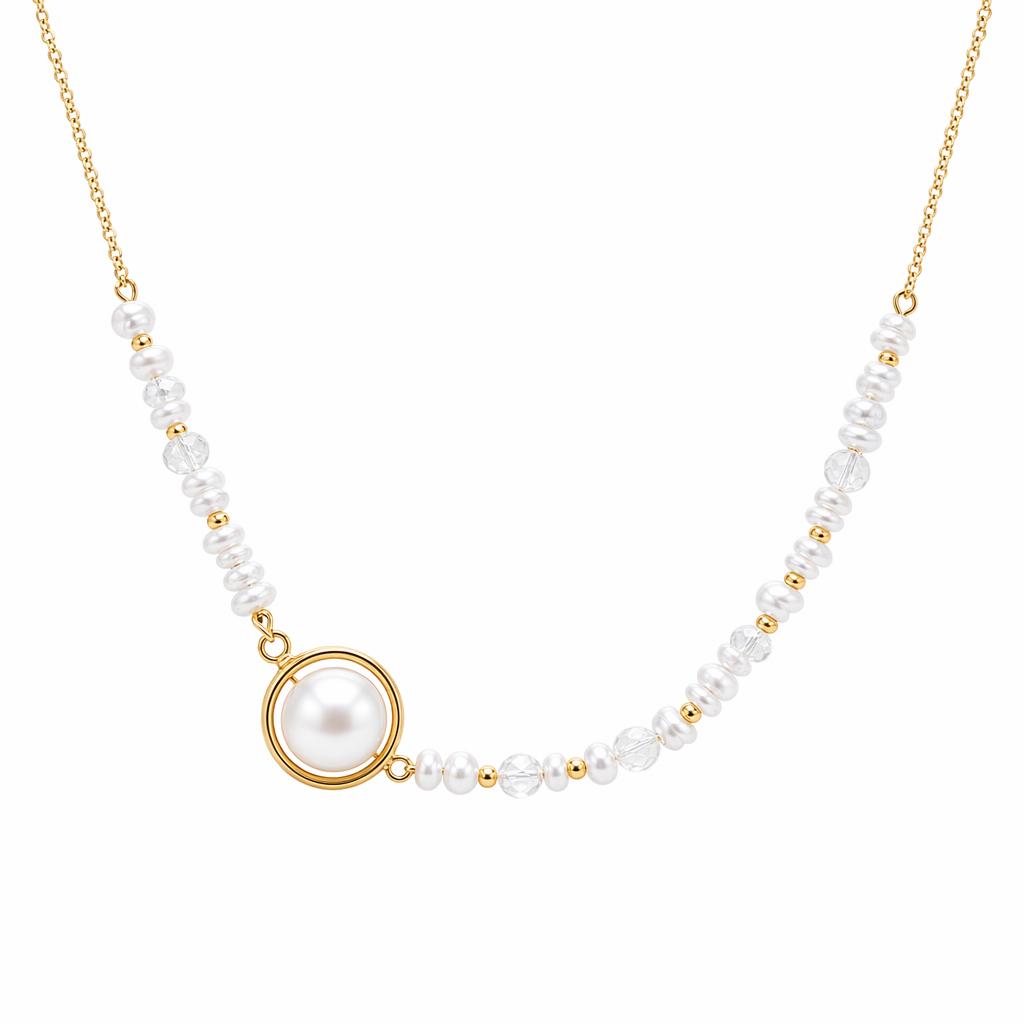
Fuduola’s Pearl Necklace Choker—Fashion Versatile Women Chain Trendy Layering Jewelry—exemplifies the layering category’s specific product design requirements: the versatile women chain design is explicitly positioned for layering combinations, the trending designation signals fashion-forward aesthetic compatibility, and the choker length makes it ideal as the shortest anchor piece in a multi-length pearl and chain layered configuration.
Conclusion: Layering Converts Single Buyers into Collection Collectors
B2B fashion jewelry buyers who recognize that the layering trend has fundamentally restructured jewelry purchase psychology—from owning individual pieces to curating configurations—build product assortments and cross-sell strategies that transform one-time buyers into repeat purchasers who continuously expand their jewelry wardrobe. The layering economy rewards the buyer who thinks in systems, not individual pieces.
Build your layering-ready assortment at imfuduola.com with necklaces designed for multi-length stacking, chains designed for pearl mixing, and sets that make layering effortless.