

Blog
The Fulfillment Speed Premium: Why 24-48 Hour Ready Inventory Is Becoming the Non-Negotiable Standard in B2B Fashion Jewelry Wholesale

In B2B wholesale, the conversation about supplier selection has historically centered on three variables: price, quality, and tooling cost. Lead time and inventory readiness were treated as secondary considerations—factors that influenced logistics planning but did not fundamentally determine supplier selection. A buyer who had identified a reliable factory with good pricing and acceptable quality tolerances absorbed the 4-8 week lead time as a cost of doing business with that supplier.
That framing is becoming obsolete. The wholesale buyers who are capturing the strongest margins in fashion jewelry in 2026 are not those who found the cheapest factory. They are those who found the fastest factory—and the gap between these two strategies is widening.
Why Lead Time Has Become a Strategic Variable, Not Just a Logistics Detail
The structural shift driving this change is the compression of fashion trend cycles. Social commerce platforms—TikTok, Xiaohongshu, Instagram Reels—have compressed the time between trend emergence and retail peak from months to weeks. A Y2K baroque pearl choker that trends on Xiaohongshu today generates wholesale purchasing demand within 7-14 days. A buyer whose supplier requires 6-8 weeks of production lead time cannot participate in that cycle at all. A buyer whose supplier ships from ready inventory in 24-48 hours can.
This is not an edge case. It is increasingly the dominant dynamic in fashion jewelry wholesale for the types of products that generate the highest reorder rates: trend-sensitive, aesthetic-driven, social-media-signal-amplified categories. The buyers who win on these SKUs are not competing on price. They are competing on speed.
The Ready Inventory vs. Production Lead Time Tradeoff: A Quantitative View
The traditional economics of ready inventory favored production-on-order: holding inventory meant carrying costs, warehouse expense, and the risk of trend misread. For buyers with strong forecasting capability and efficient logistics, production-on-order delivered superior margins because it eliminated inventory carrying costs.
The calculation shifts when social commerce trend acceleration is factored in. Consider the following:
- Production-on-order: 6-8 week lead time. A trend signal identified in Week 1 reaches retail in Week 7-9. By Week 9, the trend is already declining from peak.
- Ready-inventory fulfillment: 24-48 hour shipping. A trend signal identified in Week 1 reaches retail in Week 2. The buyer captures the full 6-8 week peak selling window.
The difference in revenue capture is not marginal. Capturing the peak selling window versus the declining phase of a trend cycle can represent a 2-4x revenue difference for a given SKU. A buyer who can move fast enough to capture the peak can price at premium. A buyer who arrives at the tail end of the cycle is discounting to clear inventory.
What 30 Million+ Ready Inventory Units Actually Means for a B2B Buyer
The figure sounds like a marketing superlative, but it has a specific operational implication: when a supplier maintains 30 million+ units of ready inventory across its catalog, the probability that any given trending SKU is already in stock when you need it is materially higher than a supplier operating on make-to-order economics.
For a B2B buyer, this changes the risk calculus of supplier selection. A supplier with deep ready inventory can fulfill urgent reorders on active SKUs—the products that are already selling, already proven, already requested by your retail customers—without forcing you into a production lead time that outlasts the demand cycle. The supplier with 130+ in-house designers adding new styles continuously means the catalog refresh rate is high, which in turn means the ready inventory is not a static pool of aging SKUs but a continuously updated collection reflecting current aesthetic trends.
The practical implication for a cross-border B2B buyer is a procurement model where you hold a smaller safety stock of proven performers, rely on your supplier’s ready inventory for urgent reorders, and use the supplier’s new design output as a constant pipeline for the next trend cycle—without having to forecast and pre-order 6-8 weeks ahead of the selling season.
Design Freshness as a Competitive Moat
130+ professional designers on the supplier side is not simply a headcount statistic. It represents the capacity to respond to trend signals with new product faster than competitors who are dependent on external design studios or catalog-based sourcing.
In practical terms: when a new aesthetic trend emerges on Xiaohongshu or TikTok, a supplier with 130+ designers can begin translating that signal into a sample within days, have it catalog-ready within 2-3 weeks, and in ready inventory within 3-4 weeks. A buyer working with that supplier gets access to trend-translated product during the peak demand window. A buyer sourcing from catalog-based suppliers is working with product that was designed for a trend cycle that may have already peaked when it arrives.
The Export Compliance Multiplier
For cross-border buyers—particularly those selling into North American, European, and Australian markets—the compliance burden of fashion jewelry has increased materially. Nickel release regulations, cadmium content limits, lead testing requirements, and platform-specific compliance mandates (Amazon’s jewelry testing requirements, EU REACH) all add cost and time to the sourcing process.
A supplier with 100+ authorized export certificates effectively shifts the compliance burden off the buyer. When the supplier has already obtained the certifications required for major export markets, the buyer is not absorbing the cost and time of third-party testing on every new SKU. This is particularly significant for buyers who are sourcing across multiple product categories or launching new branded lines, where each new SKU previously required separate compliance investment.
The 24-48 hour shipping window becomes even more valuable when combined with pre-cleared export compliance: the product is not only physically in the warehouse but documentation-ready for customs clearance in the destination market.
The Procurement Stack for 2026: Speed as Infrastructure
For B2B fashion jewelry buyers building their 2026 procurement strategy, the supplier evaluation framework should now include a dimension that was previously secondary: fulfillment speed as a competitive infrastructure requirement.
The buyers who will build durable advantages in fashion jewelry wholesale are those who structure their supplier relationships around four criteria:
- Ready inventory depth — Can the supplier fulfill urgent reorders within 48 hours on active SKUs?
- Design throughput — How many new designs does the supplier add to the catalog per season?
- Export compliance infrastructure — Does the supplier hold the certifications required for your destination markets, pre-cleared?
- Logistics reliability — What is the actual shipped-within-48-hours rate, not the quoted rate?
Fuduola Jewelry maintains 30 million+ units of ready inventory, 130+ in-house designers, and ships B2B orders within 24-48 hours. Our cross-border export infrastructure includes 100+ authorized export certificates covering major destination markets. Contact our wholesale team to discuss your procurement volume, target markets, and fulfillment requirements.
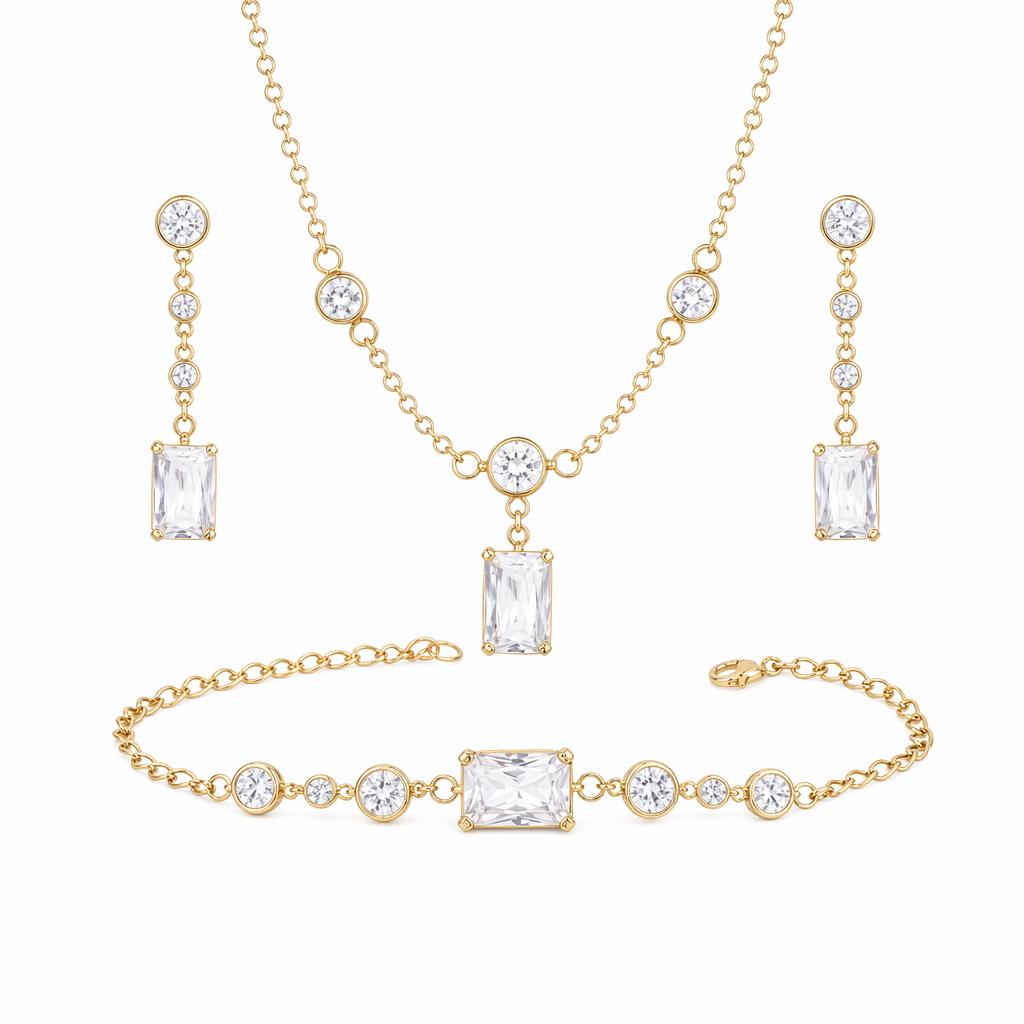
Y2K baroque pearl chokers and trend-sensitive aesthetic jewelry are among the categories where fulfillment speed directly determines margin capture.
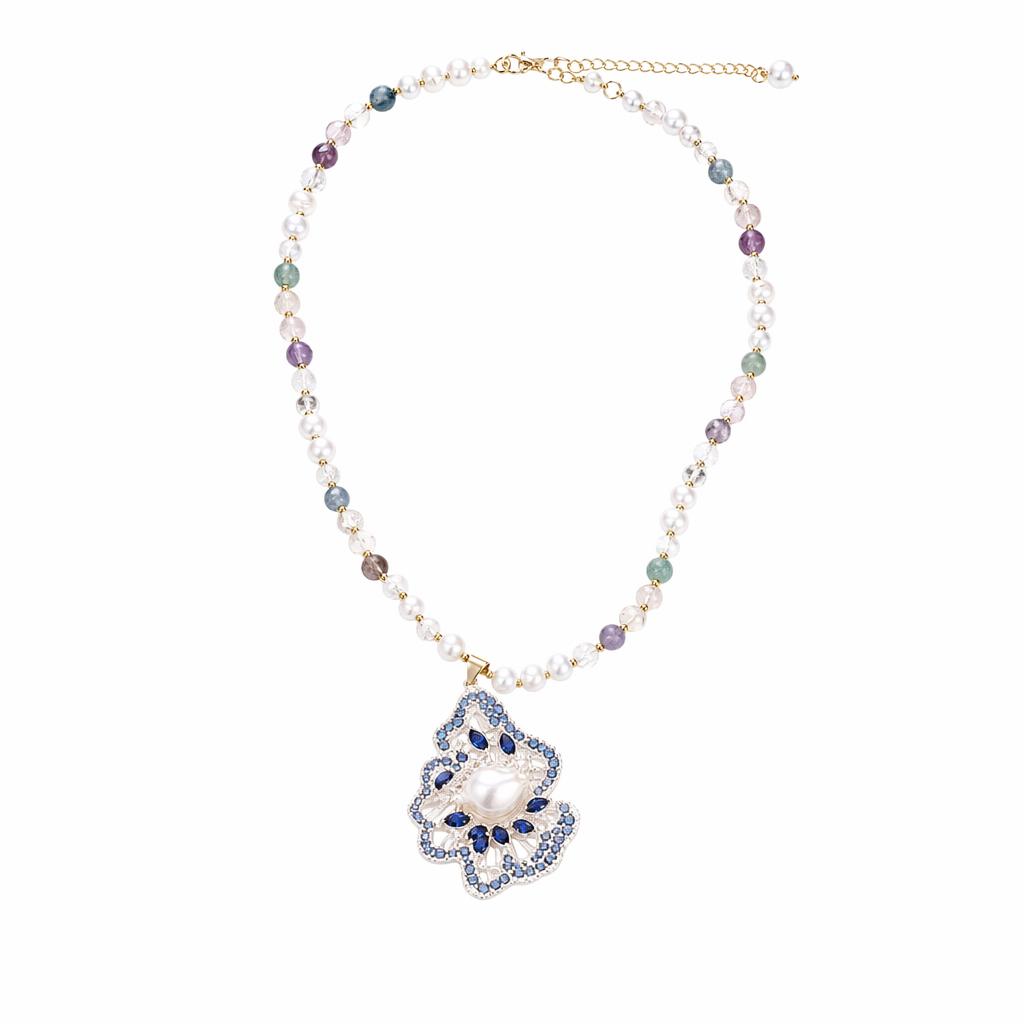
Ready-inventory fulfillment means trending layering jewelry is available when the demand signal is hottest—not weeks later.