

Blog
The Social Commerce Inventory Play: How TikTok and Xiaohongshu Virality Is Quietly Restructuring the B2B Fashion Jewelry Wholesale Cycle

In traditional B2B fashion jewelry wholesale, the inventory cycle has always run ahead of retail demand — buyers stock based on trade show calendars, seasonal trend forecasting, and manufacturer catalog cycles. The sequencing was predictable: manufacturers show new collections, buyers place orders eight to twelve weeks before the retail season opens, and retail channels sell what buyers chose to stock. The lag between trend emergence and retail shelf availability was measured in months, and experienced buyers competed on who could read the trend cycle more accurately.
Social commerce platforms — TikTok, Xiaohongshu, Instagram Reels — have broken this sequencing in a structurally significant way. When a Y2K baroque pearl choker goes viral on Xiaohongshu and generates tens of thousands of user posts in a two-week window, the retail demand spike that follows does not wait for the next trade show cycle. It hits within days. And the wholesale inventory that satisfies that demand is inventory that was already in the warehouse or that can be shipped on short notice from a supplier with responsive manufacturing capability.
What Social Commerce Virality Actually Changes in B2B Wholesale
The fundamental shift is not that social media influences consumer taste — that has been true since the early 2010s. The shift is the speed and amplitude of the demand signal. A post by a Xiaohongshu key意见领袖 (KOL) with two million followers can create category-level demand for a specific jewelry style in a window that is shorter than a typical B2B reordering lead time.
For B2B wholesale buyers, this creates a two-part challenge:
- Demand anticipation: Identifying which social media trending styles have genuine wholesale-scale demand potential versus which are noise.
- Supply responsiveness: Having a sourcing relationship that can deliver inventory into a viral demand spike before the trend peaks.
The buyers who are capturing margin in this environment are not necessarily the ones with the most accurate trend forecasting. They are the ones with the most responsive supply chain — particularly those who have established relationships with manufacturers capable of short-turn production on trending categories.
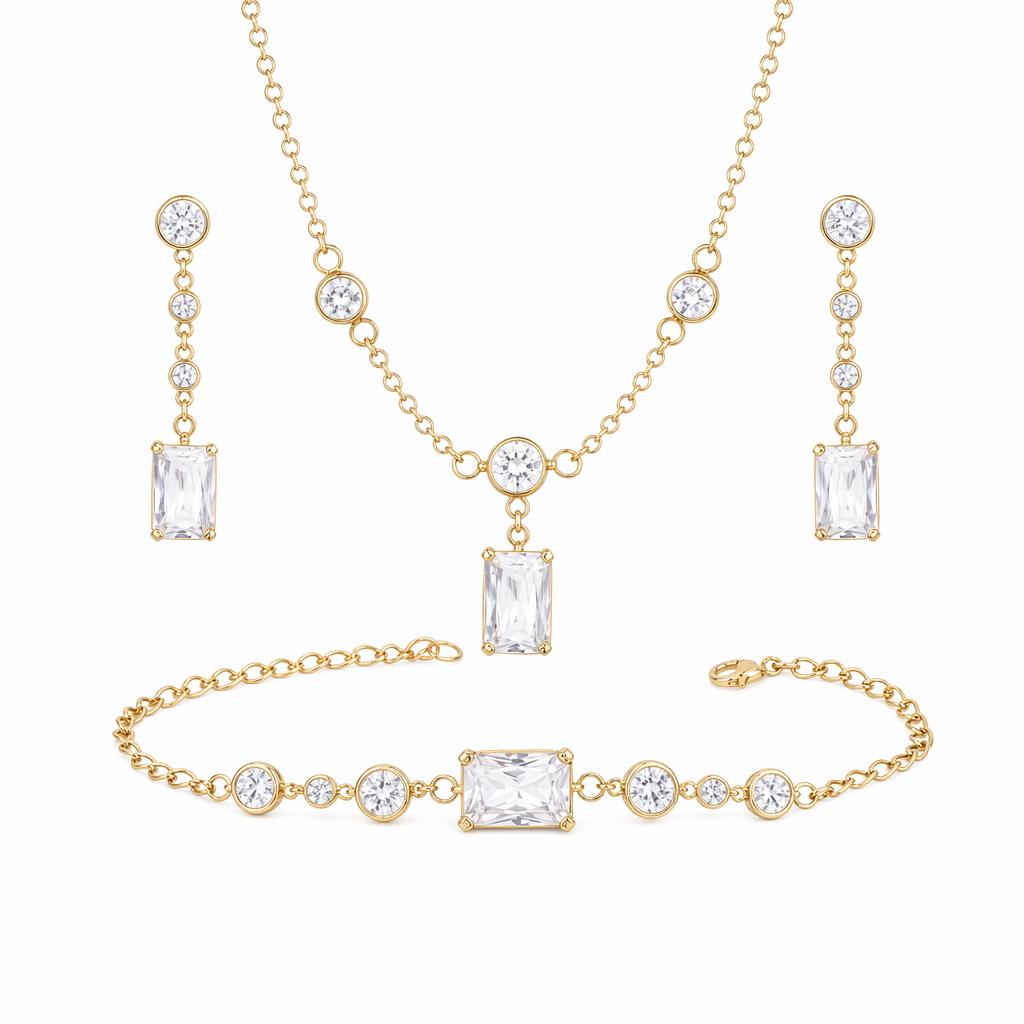
Aesthetic Shimmer Pearl Pendant — the kind of Y2K choker style that regularly surfaces in Xiaohongshu viral jewelry discussions
The Three Social Commerce Virality Patterns Every B2B Buyer Should Watch
Not all social media jewelry trends translate into wholesale-scale demand. Through systematic observation of how TikTok and Xiaohongshu virality has translated into wholesale ordering patterns over the past 24 months, three consistent patterns emerge:
- The Aesthetic Niche Cascade: A specific aesthetic — Y2K, dark academia, light luxury — gains traction with a specific demographic on social media. Within that aesthetic, one or two jewelry styles (pearl chokers, layered necklaces, minimalist rings) become signature pieces. B2B demand follows the aesthetic, not the individual SKU. Buyers who understand this can stock ahead of the specific SKU demand rather than chasing it.
- The Celebrity and KOL Single-Item Trigger: A specific piece of jewelry appears on a high-profile figure or viral post, generating direct consumer demand. This pattern creates the sharpest and shortest demand spikes — sometimes lasting only four to six weeks at meaningful volume. Supply chain responsiveness is the primary competitive variable here. Manufacturers with ready tooling and in-stock components can fill this demand; those without it cannot.
- The Cultural Moment Flash: A holiday, festival, or cultural event — Chinese New Year, Valentine’s Day, a trending TV drama — generates specific jewelry demand that social media amplifies into a broader trend. This pattern is more predictable than the others, which means buyers who plan inventory around cultural calendars with social media amplification overlays can position ahead of the demand surge.
What Responsive Supply Chain Actually Means for Fashion Jewelry Wholesale
The buyers who are best positioned to capture social commerce-driven demand have typically built their sourcing strategy around supply chain responsiveness as a primary variable, not just cost optimization. This means:
- Manufacturer relationships that include short-turn production capability: Not just the factory base price, but the manufacturing minimum and lead time for reorders on trending styles that were not in the original order.
- Designers who can create trend-adjacent variants quickly: When a pearl choker goes viral, the buyers who can offer a variant — different pearl size, different chain length, different clasp finish — capture more of the demand than those selling an identical catalog SKU.
- Ready-stock programs for known virality categories: Buyers who have negotiated standing ready-stock arrangements for categories with high social commerce volatility — baroque pearls, Y2K chokers, layered necklace sets — can ship into a viral demand spike without the lead time exposure.
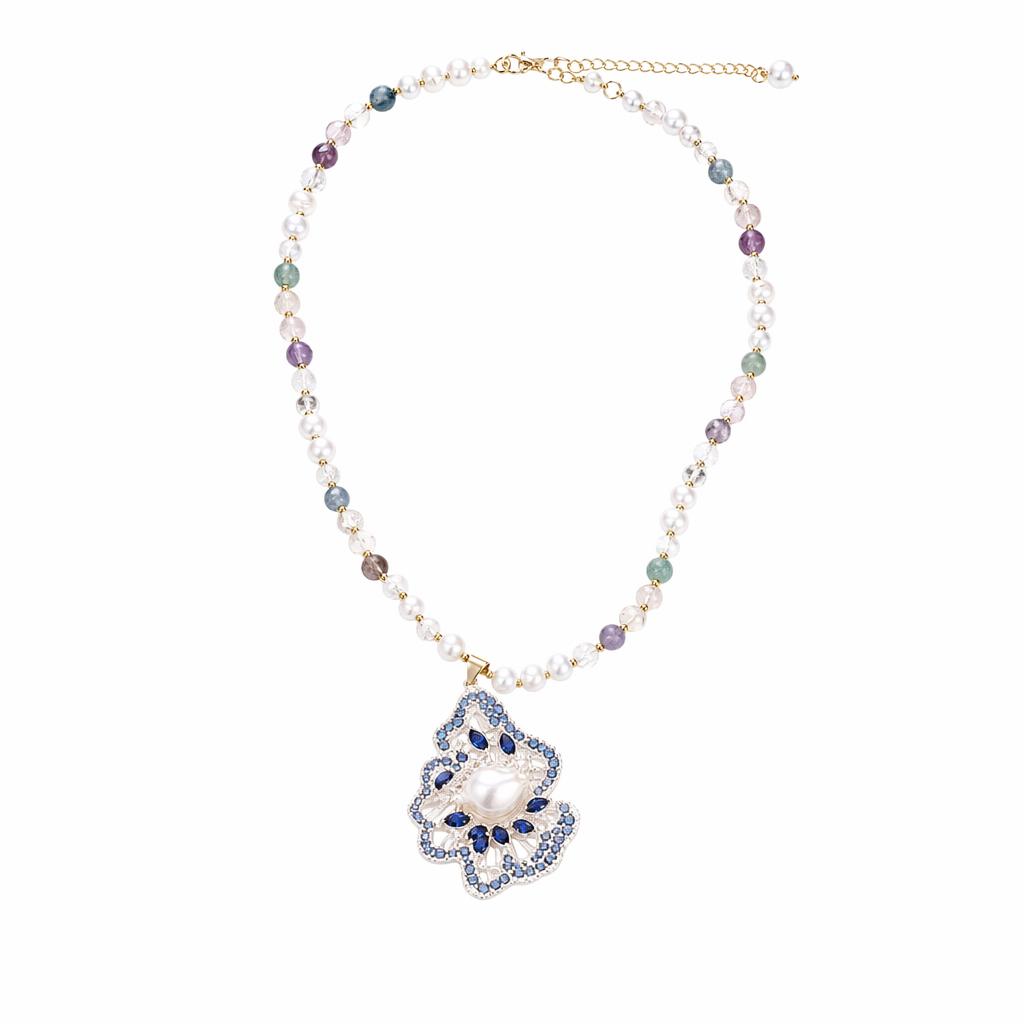
Pearl necklace chokers — a category where layered styling trends on social media create natural cross-category wholesale demand
The Catalog Advantage: How Fuduola’s Design Capacity Translates Into Virality-Response Capability
Fuduola Jewelry’s positioning around pearl necklaces and pendant categories — supported by an in-house design team that produces new styles continuously — maps directly onto the social commerce virality pattern. When a Y2K pearl aesthetic trend surfaces on Xiaohongshu, a manufacturer with existing baroque pearl inventory and the ability to produce trend-adjacent variants within days can supply buyers who are responding to the demand signal in real time.
This is structurally different from the trade show wholesale model, where the inventory decision is made months before the cultural moment that triggers demand. The buyers who understand this distinction — and have sourced accordingly — are the ones capturing the margin that the social commerce cycle creates.
Building a Social Commerce-Responsive Wholesale Strategy
For B2B fashion jewelry buyers who want to build a sourcing strategy that captures social commerce-driven demand rather than missing it, the practical starting point is monitoring, not forecasting:
- Establish a Xiaohongshu and TikTok monitoring cadence: Track which jewelry aesthetics and specific styles are gaining engagement velocity in your target demographic. You are not predicting — you are observing what is already moving.
- Pre-negotiate responsive supply terms: Identify two or three manufacturers who can produce trend-adjacent variants on short lead times for your core categories. Establish the commercial terms before the virality event, not during it.
- Stock known virality categories at cultural calendar inflection points: Chinese New Year, Valentine’s Day, 520, and Mid-Autumn Festival are all predictable cultural moments that social media amplifies. B2B buyers who stock ahead of these moments on trend-adjacent categories — including pearl jewelry across bracelets and rings — consistently outperform those who do not.
The social commerce cycle is not a separate channel from B2B wholesale — it is increasingly the demand generation engine that B2B wholesale supply chains exist to serve. Buyers who have internalized this structural shift are the ones who are building inventory strategies around it, not around the trade show calendar alone.